Value of started projects in Hungary between January and September 2024 almost 17% down y-o-y

According to the Q3 2024 EBI Construction Activity Report Hungary, after Q2 brought a decline in the value of started construction projects, in Q3 a further decrease followed. Since 2016, the Activity-Start of less than HUF 360bln between July and September has been a new negative record, even at current price. These weak numbers were not even offset by the better Q1 and Activity-Start accounted for slightly more than HUF 1800bln. The value of projects entering construction between January and September 2024 was nearly 17% lower than in the same period of 2023.
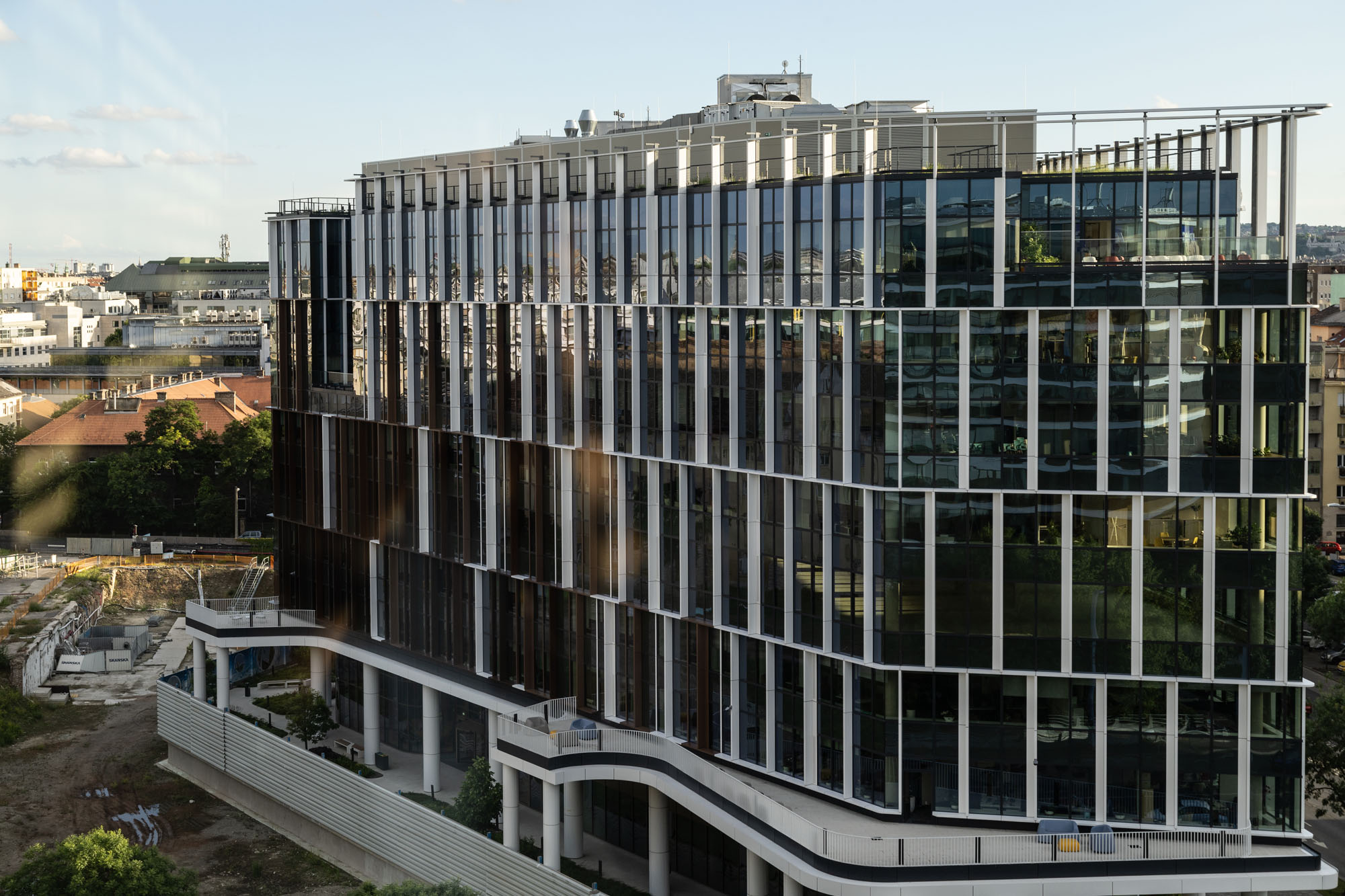
Photo by Hajnalka Hurta

Shrinking Building Construction Activity-Start

Q3 saw a continued decline in Building Construction Activity-Start with only HUF 310bln worth of started works. Except for the pandemic year of 2020, only 2017 and earlier years saw lower quarterly numbers. Looking at the first 9 months of this year, the value of started construction works was slightly less than HUF 1360bln, 15%-22% lower than in the same period of 2021-2023. At constant price, the drop was even more considerable: since 2014 there has not been a lower Activity-Start in the first three quarters than this year.

Multi-unit housing constructions posted a slight decrease in Activity-Start in Q3, but non-residential projects registered a larger drop with only HUF 200bln worth of projects entering construction phase between July and September. In the first 9 months, the Activity-Start of non-residential constructions was around HUF 1000bln, 21%-27% lower at current price than in the same period of 2021-2023. At constant price, the last time the number for the first three quarters was lower than this year’s was in 2014.

The largest construction projects launched between July and September 2024 included Lidl’s logistics center in Kiskunfélegyháza, HelloParks Páty PT5 logistics hall, Pick’s production plant in Szeged, Intretech’s plant in Kapuvár, Rheinmetall’s hydrogen and e-mobility parts production plant in Szeged and IGPark’s logistics hall in Debrecen. The construction of the hotel in Kígyó street in Budapest also started. Out of the 10 biggest projects in the quarter, 5 were multi-unit residential buildings or dormitories.

Civil engineering Activity-Start hits rock bottom

There was a further decline in civil engineering after Q2, Activity-Start in Q3 was only less than HUF 50bln – a new negative record of the last 8 years. But in terms of Activity-Start in the first 9 months, the 2024 result is not much better either. The value of construction works started in the first three quarters at current price has not been lower than this year since 2016, while at constant price it was the negative peak of the last 10 years.

Compared to the same period in 2021 and 2023, Activity-Start between January and September this year was 22%-24% lower, while it was only a little more than a third of the exceptionally high 2022.

Within civil engineering, only a negligible railway construction project started in Q3, and the value of road construction projects was also very low. In the first three quarters, road and railway construction accounted for roughly 45% in Activity-Start, their value slightly exceeding HUF 200bln.

Due to the rather low civil engineering activity, hardly any civil engineering project could get into the list of biggest projects. Only the wastewater projects in Dejtár agglomeration and the Rétság agglomeration are worth mentioning.

Budapest leads still

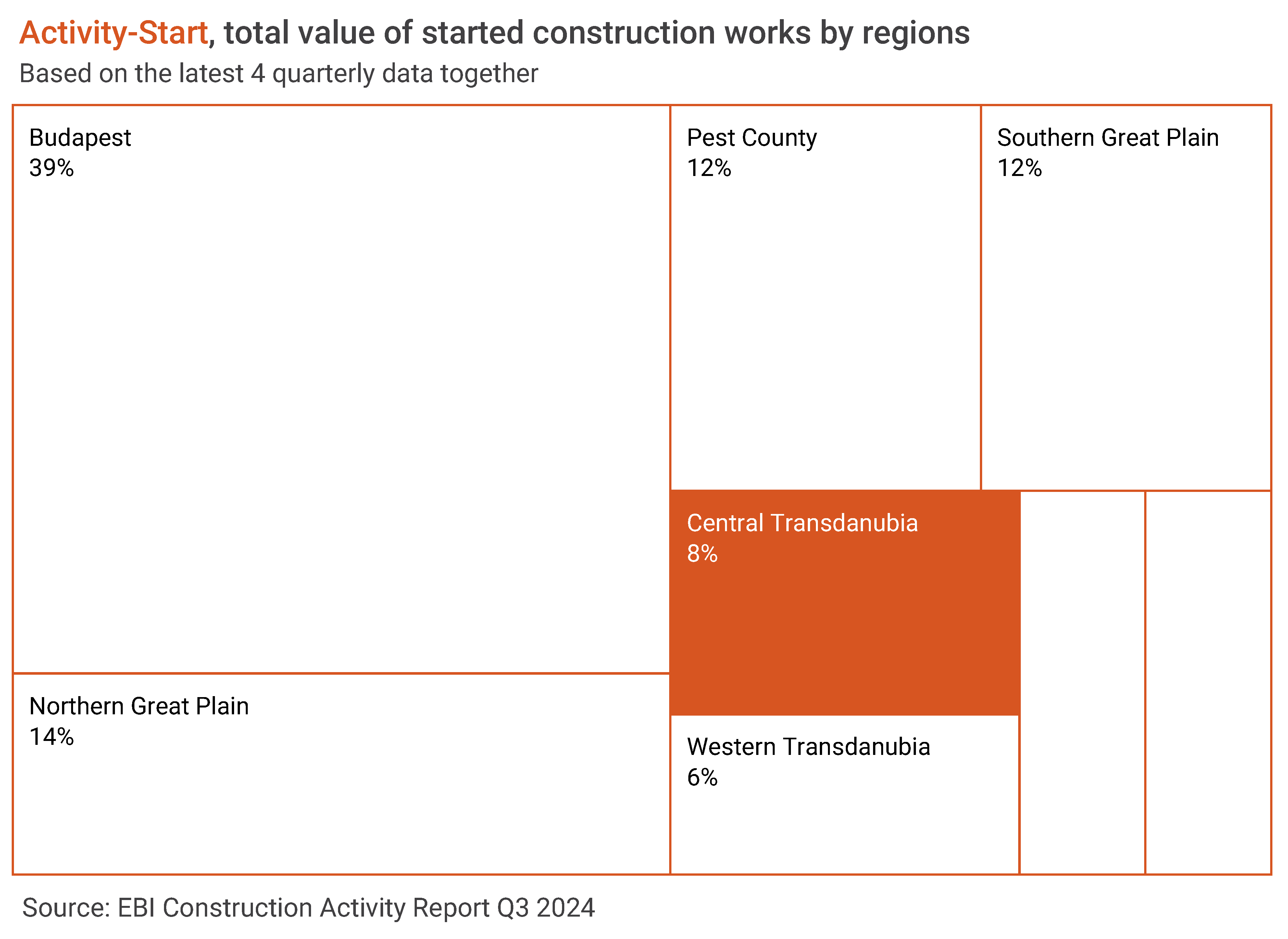
Looking at the last 4 quarters, 39% of all started construction works were in Budapest. The second largest Activity-Start was characterized by the Northern Great Plain (14%), followed by the Southern Great Plain and Pest County (12%). Northern Hungary and Southern Transdanubia recorded the lowest value of started construction works with their respective share of around 5%.
Multi-unit construction works are keeping up

Even though somewhat fewer multi-unit housing constructions started in Q3 than in Q2, Activity-Start significantly exceeded Q1. Construction works started in the segment on slightly more than HUF 100bln. Looking at the first 9 months of the year, there was an overall higher Activity-Start at current price than in the same period of 2019-2023. The value of projects entering construction was roughly the same as in the same period of 2022. At constant price, the Activity-Start for the first 9 months of this year outstripped the first three quarters of 2023; yet it was the second lowest since 2016.

This suggests that developers are still cautious with project starts even though this year’s demand for new homes increased compared to last year’s. Based on housing market trends, supply is expected to grow. A strengthening demand and rising prices may encourage more investors to start projects, and thus Activity-Start in multi-unit construction works may also increase in the future.

In Q3 the value of completed multi-unit housing buildings continued to drop, barely surpassing HUF 60bln. At the same time, in the first 9 months, approximately HUF 265bln worth of such buildings were completed, a slight rise over the same period last year. For the time being, a larger volume of homes is expected to reach completion in the last quarter, however, due to project delays, some may only be completed next year.

The biggest share of multi-unit residential constructions still started in Budapest. Based on the data of the last 4 quarters, the share of the capital city was around 60%. Eastern Hungary accounted for 14% of the Activity-Start, while Western Hungary for 24.5%, up from the previous quarters.

Central Transdanubia

Activity-Start in Central Transdanubia was roughly HUF 40bln in all three quarters this year. Thus, in the first 9 months, construction projects started at a total of HUF 123bln, a major drop compared to the same period of previous years. In the first 3 quarters of 2023, Activity-Start in the region was almost HUF 200bln, while in the first 3 quarters of 2022, it reached around HUF 300bln.

After the weaker Q1, Activity-Start for building constructions in Central Transdanubia in Q2-Q3 was roughly at last year’s levels. Thus, overall, the value of projects entering construction was around HUF 100bln in the first 9 months of this year, lower than in the corresponding period in 2023, and particularly lower than in the same period of 2021-2022.

The outstanding building construction Activity of 2021-2022 was boosted by the start of several big-league projects in 2021 (SK On’s battery factory in Iváncsa, Alba Aréna multifunctional hall in Székesfehérvár) and in 2022 (Kovács Katalin National Kayak-Canoe Sports Academy, the renovation of the church buildings in the castle quarter of Veszprém).

Projects entering construction phase between January and September 2024 in the region included the Huayou Cobalt-Bamo cathode factory in Ács and Phase 3 of Campus Lane Condo in Székesfehérvár.

In the first 9 months of 2024, hardly any civil engineering projects started in Central Transdanubia and the value of started works only reached a bit more than HUF 20bln. Among major civil engineering projects this year only Phase 1 of the dam between Mária-Valéria Bridge and Prímás island ramp can be mentioned. Last year bigger-value civil engineering projects started in the region in Q3 and Q4, for example, several water utility or wastewater projects, and the Biatorbágy-Szárliget railway line.

Original article: Tünde Tancsics (ELTINGA); English version: Eszter Falucskai (Buildecon)

The Croatian hotel sector: Will it lead the way?

Written by Michael Glazer (SEE Regional Advisors) and Tatjana Halapija (Nada Projekt), EECFA’s Croatian members

The rate of growth in the number of foreign tourists visiting Croatia declined in 2024. This, combined with a more stringent tourism tax regime and inflation, is impacting hotel construction and the construction of other accommodation facilities. Will the hotel segment, which has boosted overall construction in Croatia in a variety of ways, continue to do so?

Supetar, Brač Island, Croatia. Photo by Tatjana Halapija

Croatia’s tourism growth is slowing down, at least in the high season and especially among foreigners. Year-on-year growth in overnights for the high season of July and August 2024 versus the same period in 2023 was 0.8% overall. While domestic tourist overnights climbed 10.0%, foreign tourist overnights stagnated, growing only 0.11%. This contrasted sharply with the much better numbers for May and June, for which overall overnights increased by 3.6%, with a 3.8% and 3.6% increase for domestic and foreign tourists, respectively. Figures for the year through August 2024 compared to that period in 2023 showed a rise of 1.6% overall, 7.2% for domestic tourists and 1.1% for foreign.

Revenues for the year through August 2024 were said by the Ministry of Tourism to have grown 11% over the same period in 2023. Subtracting August-2023-to-August-2024 inflation of 3.0%, this gives a real increase of 8.0% for the period. Meanwhile, total rooms and beds for tourists in Croatia rose 1.5% and 2.4%, respectively, in 2024 over their numbers in 2023. Occupancy data is not yet available for 2024, but the Minister of Tourism expressed the view that there is little room for further expansion during the high season, indicating that Croatia’s tourism infrastructure is reaching capacity during peak periods.

The question then is what all this means for hotel construction. While the data initially seem promising in this regard, there are a number of countervailing factors that suggest a less optimistic view might be appropriate.

Part of the problem in assessing the likelihood of robust hotel construction in Croatia is that the country is entering into a time of political and policy change. The tax regime for tourism is being modified, and in some important ways tightened, while the years-delayed property tax is again rearing its head. Higher this time than ever before, because the recent parliamentary elections theoretically give the ruling party years to tamp down property-owner wrath before it has to face the voters again. Unless, of course, the precarious governing coalition falls apart, bringing the date of electoral reckoning much closer. The upcoming presidential elections further complicate the picture, since the ruling party will not want to alienate voters before that election is held.

Of course, many of these factors affect the Croatian construction sector as a whole, adding to the normal uncertainty in forecasting its evolution. So does inflation, which is at last coming under control. Gradually. Significantly more gradually than the EU average, but the 2% goal is now at least within sight. That said, the consequences of inflation for many Croatians, and particularly for pensioners who make up 30% of the country’s population, have already been severe. They are now looking to recoup some of the losses in purchasing power that they’ve experienced. The government seems to have succeeded in threading the needle of combining pay rises for public sector workers with fiscal responsibility when it raised public sector salaries by more than 20% prior to this year’s parliamentary elections. It remains to be seen if it can do so with the inflation-related demands on its resources.

Croatia’s hotel sector is in itself an important influence on the country’s construction sectors. Its income provides tax revenues that fund government construction projects, and the payments that it makes to employees and suppliers provide the means for them to invest in, among other things, buildings and other construction. Accordingly, the 8% real increase in hotel income is likely to boost construction overall, at least to an extent. How much requires more data (e.g., more up-to-date hotel income figures) and further analysis.  

There’s also the question of how much the increase in hotel income reflects the fortunes of non-hotel tourism accommodation providers. It’s not clear that they have done as well as the hotels in this regard. This is important, because they provide by far the majority of tourist beds. Their construction projects are individually more modest, but they do add up.

We should know considerably more by the time we prepare our 2024 Winter Forecast Report (available on 16 December). This additional information that we will collect by then will guide us in assessing the potential for hotel and other tourist accommodation construction. It will also help us to evaluate the actual strength of the current Croatian tourism season and the likely strength of the coming one, important influences on the output potential of the Croatian construction industry in its entirety. 

Life after the preferential mortgage scheme in Russia

Written by Andrey Vakulenko – MACON, EECFA Russia

The biggest preferential mortgage scheme in the history of Russia, a temporary response to the pandemic in 2020, lasted much longer than planned. The market got accustomed to relatively low rates, prices rose sharply, and mortgages became the main tool for purchasing homes. However, external conditions changed dramatically in the meantime, and this summer the program was phased out. Housing demand immediately collapsed, and the main question now is whether the market will be able to find balance, or the current problems are just the beginning of a major crisis.

The saga of the preferential mortgage scheme

Even though the Russian housing market developed well in the pre-pandemic period, in 2020 the pandemic (lockdown, decline in the economy and in the population’s income) threatened the construction industry. Hence the state program to subsidize mortgage rates. Such programs existed before but only targeted certain groups (e.g. families with children). The new scheme in 2020 was large-scale with no restriction on the type of buyer and was to support demand and ensure stability in the housing market that is one of the key construction segments in Russia.

But good intentions soon turned into problems. The impact of preferential mortgages on demand was disproportionately big: buyer activity soared against the backdrop of a relatively short lockdown and a more-favorable-than-initially-expected dynamics of the economy during the pandemic. Increased demand led to a surge in the cost per square meter. Many investors took out mortgages to make money on rapidly rising prices. Initial savings on loan interest at the start of the program were quickly exhausted due to growing prices. Eventually, the preferential mortgage program, designed to support the solvency of home buyers, reached the exact opposite: it sharply reduced the availability of new homes for them, so much so that it is now at its lowest level of the last 15 years. Another key problem was the excessive length of the scheme. It was kept in the post-pandemic period and extended several times, continuing to stimulate demand and price growth (although conditions were revised to be stringent). So, the market became dependent on state participation and ensured affordable mortgage rates for all types of buyers.

By early 2024, the preferential mortgage scheme started to show side effects such as structural market imbalances (secondary housing became significantly cheaper than primary housing as the secondary market did not have such support), increased indebtedness of the population, and the risk of a primary housing market bubble. The drawbacks of the scheme gradually began to outweigh its benefits. However, either the continuation or the abrupt phase-out of the program would have damaged the market. Yet, external conditions have become extremely difficult, and rising inflation has contributed to a sharp tightening of monetary policy. The key rate of the Central Bank of Russia has increased from 7.5% to 19% since last summer and is now at historical highs. At the start of the scheme in 2020, market mortgage rates were at 8%–9%, and the state subsidized them to 6.5%. In 2024, mortgage rates on average grew to 20%-21%, while the program allowed borrowing at 8%. Because of this, government spending on subsidizing mortgage rates under the scheme soared, and its final cancellation was only a matter of time.

What is happening now

The large-scale preferential mortgage program, officially phased out on 1 July 2024, was the most massive demand support in the history of the Russian housing market: 1.6 million loans were issued for a total of about RUB 6 trillion. Now state support for housing has become more targeted through the introduction of other mortgage programs:

  • Family Mortgage Scheme for families with children
  • IT Mortgage Scheme for employees of IT companies
  • Rural Mortgage Scheme for homes located in rural areas
  • Far Eastern Mortgage Scheme in the eastern and Arctic regions of Russia.

These, however, due to their narrower audience and stricter conditions, will not be able to fully compensate for the cancellation of the preferential mortgage program. The record high key rate makes general market rates effectively prohibitive. In monetary terms, the number of issued mortgage loans in July 2024 dived by 55% over June 2024. The volume of accumulated debt on mortgage loans this July decreased for the first time since 2019. The number of transactions in the primary market (in construction projects) sank by 51% this July against this June and continued to decline this August by another 13%.

Despite reduced demand, there is very high developer activity which has been breaking records for 7 months in a row. At the beginning of September 2024, about 117 million sqm of multi-unit residential buildings were under construction. And growth in supply amid reduced demand creates risks of market oversupply in the future.

What happens next

The end of the preferential mortgage program was planned to take place in a period of low market mortgage rates, but the gap between market rates and preferential rates had been growing steadily and reached record levels this year. Thus, due to the cancellation of preferential mortgages, demand in the market crumpled. It is aggravated by the expected continuation of a tight monetary policy, at least throughout 2025. The projected level of the key rate for this period is 14%-16%, so market mortgage rates will remain high in 2025, exerting strong downward pressure on demand.

Since the mortgage loan became the main instrument for home purchases during the scheme, demand could only be activated if we returned to those rates. The targeted mortgage programs mentioned above partly do so, but they will not be able to fully replace the large-scale preferential one. The most significant, though, Family Mortgage, was extended this July until 2030 with some restrictions: the program now applies mainly to families with a child under 6 years of age (and two other smaller groups of the population[1]). The number of families with children under 6 as per the latest census (2020) was about 7.1 million, but the number of potential borrowers until 2030 will plummet owing to the deceleration in birth rates (an average decline of 4% per year over the past 5 years) and the limitation of the program itself (it can only be used once).

Therefore, demand in the housing market does not have any clear prerequisites for growth in the coming years, and the volume of unsold supply will likely accumulate. Yet, existing schemes might develop, and new ones might be launched, which one way or another might support buyer activity and the entire residential market:

  • New targeted mortgage programs might be introduced based on professional or geographic criteria (public sector employees, representatives of professions valuable to the state, scarcely populated areas, etc). They will not carry the risks of market overheating or bubble since they exclude the purchase of homes for investment. But with high key rates, any such program requires huge state funding, so their introduction in 2024-2025 is unlikely. 
  • New payment schemes might be launched. The popularity of tranche mortgages[2] and various instalment programs is growing, and savings schemes are also being discussed (banks might introduce special target mortgage deposits on which buyers could accumulate funds for home purchases with partial co-financing from federal or regional authorities).
  • The flexibility of mortgage products might grow. Banks are starting to offer borrowers the inclusion of a clause in loan agreements to guarantee a reduction in mortgage rates when the key rate falls. That is, if the key rate drops in the duration of the agreement, the bank reduces the mortgage rate without having to conclude a new agreement.

Direct discounts or a major reduction in the cost per square meter are unlikely though since developers are constrained by the highly increased construction costs in 2022-2024 and will not agree to a considerable decrease in prices. Thus, in the coming years we can expect a reduction in new residential projects launched.

Currently, the housing market in Russia, for an indefinite period, is becoming to be dominated by buyers who qualify for one of the targeted mortgage schemes and whose list will be determined by the state. The game-changer might either be a pronounced and long-lasting increase in the population’s income or a drop in the key rate and, accordingly, market rates on mortgage loans, which is unlikely at least in 2024-2025. Therefore, residential construction volumes will likely decrease. A more detailed forecast on the residential market and the entire construction industry of Russia can be found in the current EECFA Forecast Report Russia that can be purchased on our website.


[1] Families with a disabled child and families with two or more children aged 7-17 living in regions with low housing construction activity (35 regions of Russia) or in a small town (with a population of less than 50,000).

[2] The bank issues a mortgage loan to a client for purchasing a home under construction in several parts. The total loan amount is divided into several tranches (the borrower has a minimum loan payment until the new building is put into operation).

Türkiye’s quake reconstruction efforts taking their toll on the economy

Written by Prof. Ali Türel, EECFA Türkiye

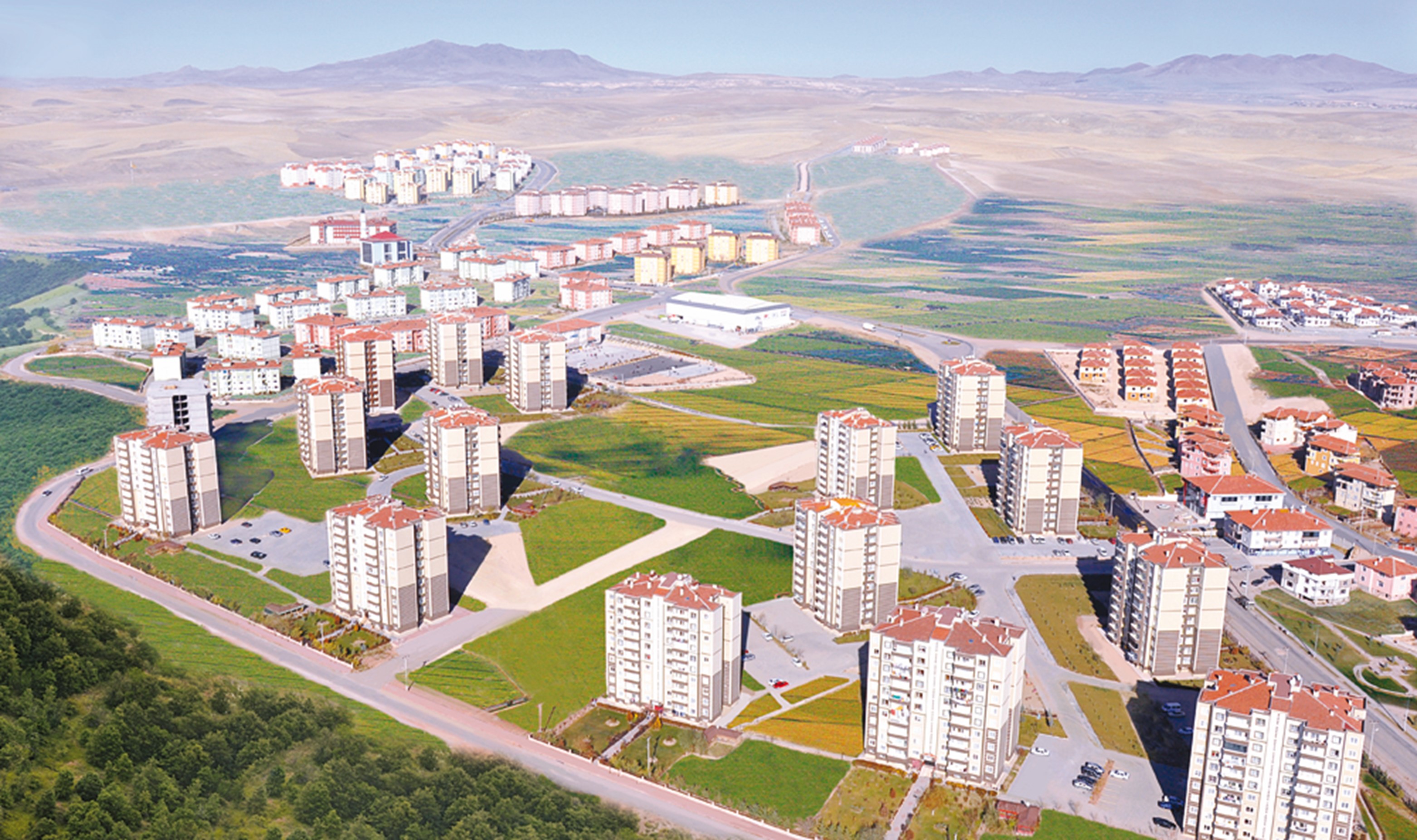
One and a half years after the devastating quakes that shook Türkiye, rebuilding is slow, and the public money spent on the reconstruction of damaged buildings and infrastructure are causing massive budget defi­cits in Türkiye’s economy. It is topped with high inflation, increased interest rates, growing unemployment and a stagnant minimum wage. With the current pace of construction, it seems that the reconstruction of 870 thousand units will take two to three additional years.

Owner-occupied social housing project of the Housing Development Administration (TOKI) that is in charge of rebuilding in earthquake-hit regions. Photo with the permission of TOKI

What happens in Türkiye’s economy

Türkiye’s economy continues to have a bad time due to high inflation despite conventional economic policies put into effect after the re-election of President Recep Tayyip Erdoğan last May. In the following 10 months the Central Bank of Türkiye (CBT) increased the base rate from 8,5 points to 50 points and since then it has remained at that level. Bank interest rates followed suit, causing affordability problems for mortgage and consumer loans.

In July 2024, monthly and yearly rises of Consumer Price Index were 3,23% and 61,78%, and in Domestic Producer Price Index 1,94% and 41,37, respectively. The latest inflation forecast of the CBT at the end of the year is between 38% and 42%. Policies to curb inflation began to show their negative effects on the economy as Calendar Adjusted Production Index of Total Industry fell by 4,7% and Manufacturing by 6,9% in June 2024 from June 2023. Seasonal and Calendar Adjusted Index also dropped in June 2024 from the previous month by a respective 2,1% and 3,1%. Unemployment grew by 7,2% in June 2024 and rose to 9,2% as 234 thousand people lost their jobs within one month. GDP is also predicted to decline in Q3 and Q4.    

Wage increases are curtailed within the scope of the economic program to keep inflation under control. The minimum wage did not rise for the whole second half of 2024, despite Consumer Price Index rose by 24,73% in the first 6 months. Income levels of pensioners, most notably of those in the lowest income segment, have been a much-complained issue in recent months. This is also aggravated by the low retirement age that was further reduced by a law enacted in 2023. The high number of retired people to total employment necessitates increasing transfers from the national budget to the Social Security Institution.  

How reconstruction efforts stand 1,5 years after the quakes

Rebuilding damaged housing, workplaces (industrial, commercial and other uses), and infrastructure following the earthquakes on 6 February 2023 requires massive investments from the national budget. Big budget deficits under these circumstances lead to increases in the public sector’s borrowing requirements. Civil engineering projects are worst affected by the financial strain on the national budget owing to the state’s legal obligations in rebuilding structures damaged by natural disasters.

The reconstruction of buildings and infrastructure is estimated at EUR 100 billion. As an alternative to the direct provision, the government introduced a financial assistance: 1.500.000 TL (44177 Euro) loan with a 50% grant to people either building an own house or buying one.

According to Murat Kurum, the recently reappointed Minister of Environment, Urbanisation, and Climate Change (the organization responsible for rebuilding collapsed and pulled down or heavily damaged buildings):

  • in the first 3 months of 2024, the construction of 76 thousand dwelling units was completed and transferred to their owners
  • the target for 2024 is to complete 200 thousand dwelling units by the end of the year
  • monthly expected completion is 25-30 thousand dwelling units

It implies that rebuilding 870 thousand independent units (650 thousand housing, 170 thousand workplaces) may continue for 2 to 3 more years.

Building and housing developments as of Summer 2024

In Q2 2024, construction permits for buildings in total floor area nosedived by 30,9% from Q2 2023 and the yearly change was a 32,9% rise in Q1 2024. In housing permits the yearly fall in the number of units in Q2 2024 was 28,9% (against the 34,3% growth in the previous quarter).

Occupancy permits for buildings in Q2 2024 sank by 14,4% in total floor area, and 23,5% in the number of dwelling units from Q2 2023. Like starts, the yearly rates were 45,5% and 38,9% growth in Q1 2024, respectively. Thus, it can be said that policies to curb inflation also create negative effects in building production.

Housing Price Index grew by 38,7% at current price yearly in July 2024, showing a 14,3% drop in real terms. The rise in housing prices was much less than construction cost in the previous month; Construction Cost Index increased yearly by 66,12% in June 2024 when Consumer Price Index rose by 71,60% and Domestic Producer Price Index by 50,09%. June 2024 was the first month over many years that the yearly rise in Construction Cost Index was less than Consumer Price Index. The rise in labour cost, 105,50%, is pushing total construction costs upward, and material prices, with a 51,55% rise, downward. Curbing minimum wage increases until the end of 2024 may be expected to lead to a lower rate of change in the construction cost in the following months.

In July 2024 housing transactions comprised 127,088 thousand (+16% like-for-like). Between January and July 2024, the number of dwelling units sold was 672,162 thousand, only 0,5% less than in the same 7 months of 2023. The main difference was in mortgage sales (only 9% of total sales in July 2024), and 9,4% in January-July 2024, dropping by 20.9% and 53,8% from the same months last year. Such great falls in mortgage sales are related to decreased affordability for mortgage loan repayments of commercial banks between 3,05 and 4,20 monthly interest rates for 10-year term mortgages. Subsidized mortgage loans by state-owned banks at 0.69-0.99% monthly rates to people who are not homeowners did not greatly affect the share of mortgaged transactions. 

Forecast up to 2026 for the Turkish construction market is available in the EECFA Forecast Report Türkiye 2024 Summer. To order it or to request a sample report, please contact us.

Q2 registers historically low quarterly Activity-Start in Hungarian construction, but H1 is not so bad

As per the latest EBI Construction Activity Report Hungary, in the second quarter this year started construction works barely exceeded HUF 400 billion – the lowest quarterly Activity-Start even at current prices since 2016. But due to the exceptional Q1 value, H1 2024 overall did not show a massive decline (only -11%) over H1 2023. Compared to 2021, however, the drop was 18%, and against the exceptionally good H1 2022, the decline was a whopping 45%. And at constant prices, Activity-Start was the negative record of the past 9 years.

EBI Construction Activity Report Hungary analyses the construction industry on a quarterly basis, including the volume of newly started construction works and the value of projects completed in each quarter in aggregate and by segment as well. It is prepared by Eltinga, Buildecon (creation of indicators and development of algorithms for aggregation) and iBuild (project research and project database). For more details on how to obtain the full report, please contact us.

Lowest quarterly value of started building construction works since 2020

As per EBI Construction Activity Report Hungary, Q1 2024 saw a high Activity-Start but was followed by Q2 that recorded a decline in buildings as well. The value of started building construction works did not reach HUF 360 billion – the lowest quarterly figure since 2020. Overall, the subsector was characterized by a weaker Activity-Start even in the first half of the year: compared to H1 2023, the value of started construction works dropped by 11.8%, while over the same period of 2022 and 2021, at current prices, the decline was almost 30% and 21.5%, respectively. At constant prices, only H1 2014 was weaker than H1 2024.

Most of the decline occurred owing to the more moderate non-residential project starts. The decrease in multi-unit residential buildings was much smaller and the value of started construction works was roughly at the level of Q1. In non-residential buildings, Activity-Start was slightly higher than HUF 260 billion between April and June this year (a drop of almost 43% over Q1) but was also much lower than in the same period of the previous 3 years. Looking at individual quarters between 2021 and 2023, this year’s Q2 was the second lowest at current prices, and at constant prices, it was the lowest value since 2013. Due to the weaker Q2, Activity-Start in H1 2024 was also lower than in the same period of the previous 3 years at current prices. At constant prices, it was only H1 2014 that saw a lower value.

Biggest-league building construction projects launched in Q2 this year comprised the construction of MBH Bank HQ in Budapest, Phase I of BYD electric car factory in Szeged, and Huayou Cobalt-Bamo cathode factory in Ács. The construction of Moxy Budapest Downtown (hotel) and that of several multi-unit residential buildings also began.

The value of civil engineering project starts hit rock bottom in Q2

The stellar numbers in Q1 were followed by a massive decline in Civil Engineering Activity-Start of EBI Construction Activity Report Hungary between April and June this year. Q2 brought minimal civil engineering project starts, and the value of started works did not reach HUF 70 billion – the lowest quarterly value since 2016. However, comparing the first half of the year with previous years, 2024 is not exceptionally bad. The value of Activity-Start was 10.5% and 9% less than in the same period of 2023 and 2021, and it even exceeded that of 2020. There was a major drop only compared to the outstanding figures between January and June 2022. Within civil engineering, in H1 2024 road and railway construction works accounted for around 45% of Activity-Start and their value did not go up to HUF 200 billion.

It is very telling about the rock-bottom level of Civil Engineering Activity-Start that in the period between April and June this year no civil engineering project could make it to the top 10 biggest started construction projects.

Most construction works continued to start in the capital city

Looking at the past 4 quarters, the largest share of construction works again started in Budapest. The capital city’s share in the nationwide Activity-Start even surpassed 40%. Northern Great Plain had the second largest share, but its 13% was a great drop compared to the 20%-30% of the previous quarters. Pest County came third with 12%, while the smallest share of projects started in Southern Transdanubia with only 5% of launched construction projects in the last 4 quarters.

Practically no change in the value of started multi-unit residential projects

The latest EBI Construction Activity Report Hungary has found that after Q1 2024, in Q2 the value of multi-unit residential construction works started during 3 months was almost unchanged with a total of slightly more than HUF 90 billion. In the first half of this year, Activity-Start in the segment was less than HUF 200 billion, roughly corresponding to the level of the same period in 2021. At constant prices, although in H1 2024 the Activity-Start of multi-unit residential construction exceeded the one in H1 2023, it fell short of the one registered in the January-June period of previous years. It was only in H1 2015 when it was lower. Nevertheless, compared to other construction segments, multi-unit performed much better in Q2: the 10 largest-scale projects entering construction phase included several multi-unit ones, even with just over 100 flats.

The value of completed multi-unit residential construction works shrank in Q2 against Q1, but it stayed high, outstripping HUF 200 billion in H1 2024, making it the strongest first half year recently. Activity-Completion in H1 2024 was almost 42% higher than in the same period of 2023 and even surpassed the record H1 2020 by more than 22%. Further on, Activity-Completion may continue to be high, and, based on expected completion dates, this year may break a new record.

During the last 4 quarters, the largest share of multi-unit residential construction works continued to start in Budapest whose share also grew compared to the previous quarter with two-thirds of Activity-Start. Eastern Hungary’s share was 15.5%, while in Western Hungary 16.6% of such works began.

Southern Great Plain saw some growth in half-yearly Activity-Start

Southern Great Plain also saw some expansion in construction during the first half of this year, even though Q2 brought a decrease after Q1 – as per the latest EBI Construction Activity Report Hungary. Activity-Start here amounted to HUF 126 billion between January and June 2024. Building construction projects contributed most to the Activity-Start of this region: the value of started construction works in H1 2024 was HUF 110 billion – the level of H1 2023. But it was also true for regional building constructions that the higher Q1 values pushed up the half-yearly ones and Q2 brought a more moderate Activity-Start. Within buildings, multi-unit residential buildings represented a minimal level in the region, as in previous years, only 6% of such projects nationwide started here in the first half of the year.

Among the biggest non-residential projects entering construction phase in H1 2024 in the region were Benepack’s packaging materials factory in Makó, Mercedes-Benz battery assembly plant in Kecskemét, and Phase I of BYD electric car factory in Szeged. These projects were also considered large in terms of works started in recent years: in value, between 2021 and 2024 they ranked second, third and fifth, respectively.

Hardly any civil engineering project began in Southern Great Plain this year. Activity-Start in civil engineering in H1 2024 was less than HUF 16 billion – one of the lowest half-yearly results in recent years. Civil engineering works in the region reached an outstanding value in late 2021 and in early 2022 that saw the construction start of the Békéscsaba-Lőkösháza railway line, the Soroksár-Kelebia section of the Budapest-Belgrade railway line, and the Kecskemét-Szentkirály section of M44 expressway whose total value was hundreds of billions of Hungarian Forints and whose construction is still ongoing.

Article: Tünde Tancsics (ELTINGA); English version: Eszter Falucskai (Buildecon)

EECFA countries in the European Commission’s 2024 Macro Forecast

Written by Tünde Tancsics and Dóra Barát – ELTINGA-EECFA Research

Similarly to every summer, this summer too we have looked at how the European Commission sees our countries. Here is how GDP, investment and construction investment forecast have changed in the past half year.

Between Autumn 2023 and Spring 2024 economic outlook has improved for the majority of countries in the Eastern and Central Eastern European region (EECFA countries) for 2024-2025. Exceptions only included Türkiye, Romania and Hungary (this latter is covered by Euroconstruct), but the deterioration of the outlook was minimal. Expected GDP growth also decreased in case of the EU and the Eurozone.

Economic growth in the examined countries is expected to be between 2.3% and 3.9% by 2024-2025. The largest GDP expansion is related to Serbia, while Russia’s economy may grow least. At the same time, the expansion in the countries of the region is set to be much higher than in the EU and the Eurozone where projected GDP growth is only 1.1% and 1.3%, respectively.

Projected gross fixed capital formation (GFCF) growth rate for 2024-2025 sank in the majority of the countries by Spring 2024 from the previous level in Autumn 2023 with the only exceptions being Russia and Serbia. In Russia, a slight increase was seen from Autumn 2023 to Spring 2024. Prospects in Serbia significantly improved and next to Romania, its growth rate became the highest (6,45%) in the Eastern- and Central Eastern-European region (EECFA countries).

Expected GFCF (investment) growth is also high in Hungary, 4.9%, while for the other countries in the region, projected GFCF increase in 2024-2025 is between 3.05% and 3.6%. In the EU and the Eurozone, a much more modest expansion is estimated than in the region; GFCF prospects decreased from Autumn 2023 to Spring 2024, and they are only 1.15% and 0.85%.

Growth rate for investment into construction for 2024-2025 improved in Croatia, Hungary and Bulgaria, while in Romania, Slovenia, and in the EU and the Eurozone the outlook deteriorated from Autumn 2023 to Spring 2024. When it comes to the EU, growth is foreseen to be close to zero, whereas in the Eurozone a slight drop is projected for 2024-2025. The predicted growth for investment into construction in Spring 2024 was the highest in Romania (8.05%), followed by Hungary, Bulgaria, Slovenia (between 4.1% and 4.4%) and Croatia (2.45%).

This above represents the Commission’s view and it is different from ours at some point. It might be because our focus is exclusively on construction. For each segment we come up with an individual story and this is how the total construction market is formed. The latest predictions are in the 2024 Summer EECFA Construction Forecast Reports. Sample report and order: eecfa.com

As we see, Türkiye and Croatia could be top performers, while Russia and Romania are forecast to shrink. Although the Ukrainian growth rate is impressive it is because the market is coming back from a very low level.

EECFA 2024 Summer Construction Forecast

EECFA, our construction forecasting cooperation in Eastern European countries, released its 2024 Summer construction forecast on 25 June. View a sample report and buy any of the 8 reports or the package at eecfa.com. For discounts, contact us.

The expansion phase was over in 2023 in SEE as a whole, but the current contraction is not foreseen to last as long as the latest one after 2008. By 2026 this region could return to around its previous peak. The EE region as a whole is expanding, and we are still optimistic all the way on the horizon.

A closer look reveals that only Romania, the largest market, is behind the overall setback of the SEE region. Here the previous peak is not expected to be reached soon. Elsewhere in the region further expansion is our current view. Serbia’s trajectory is a bit different, but the market could stay at a high level despite the drop next year. Recovery in Türkiye is forecast to be so strong that it could well counterbalance a shrinking Russia. Ukraine is coming back from a very low level, hence the relatively good growth figures.

Southeast European construction outlook up to 2026

Bulgaria’s economy is set to grow by almost 2% in 2024 and 3% in 2025, while the country is heading to a eurozone membership, most likely in 2026. In parallel, construction output is forecasted to decline year on year in 2024-2026 due to expected drop in residential construction and heterogeneous, yet positive performance of the non-residential one. Civil engineering bears a potential for an accelerated growth if EU funds’ absorption bounces back and public investments in infrastructure speed up. 

Croatian civil engineering is moving into even higher gear now, especially with the recent update to the TEN-T Network, which greatly benefited Croatia. Accordingly, output in most civil engineering sectors will rise. Building output presents a more mixed picture, with some sectors having reached or come close to peak output, while others are thriving.

The outlook for Romania’s construction sector remains negative this year. Inflation is shrinking, but more slowly than desired, keeping interest rates relatively high for longer and impacting financing costs. Also, the switch between the EU programming periods, combined with still high construction costs and an election year, will mean lower efficiency in starting and implementing long-term projects. Because the macroeconomic outlook is good and if the other issues are resolved, by 2026 construction might start growing again.

Serbia is expecting to see more stabilization in the construction sector this year, with both building construction and civil engineering estimated to stay in the black. The latter is very close to recording a consecutive double-digit growth in 2024. The economy is picking up, interest rates are slowly receding, so there is confidence that construction can sustain high output levels. Demand stays relatively strong, while stable prices are to keep investments high this year.

Slovenian construction is forecasted to surpass its record 2023 output this year and continue its growth trajectory into 2025, exceeding EUR 6 billion for the first time. Major civil engineering projects will likely drive this growth, bolstered by flood reconstruction efforts. Public investment in housing is planned but is contingent on future public funding availability that will also impact non-residential construction. The industry faces workforce shortages, but increased immigration and declining construction costs are expected to mitigate these issues, supporting further growth.

Eastern European construction markets of EECFA up to 2026

In Russia, the increase in people’s solvency, the restoration of business activity and dynamic economic development ensured growth in construction output last year, but recovery trends are slowing down owing to both external restrictions and internal negative factors. The residential and civil engineering construction subsectors remain key for the industry, but their dynamics depend on the level of government participation and the volume of allocated budget funds. Even though negative trend is forecasted for the residential subsector in the coming years, the drop in overall construction output in 2024-2026 is not predicted to be significant as the market will be supported by the construction of export infrastructure projects.

Türkiye’s economy has been greatly affected by last year’s earthquakes that caused great human and material casualties, requiring the rebuilding of destroyed homes, workplaces, and infrastructure. The government’s costly obligations coincide with a return to conventional economic policies that require austerity. Massive reconstruction spendings have caused huge budget deficits and civil engineering is worst affected by this. Increased interest rates have created affordability problems for bank loans, mostly mortgage ones, so home purchases rely mostly on equity financing and serve as a hedge against inflation. Home permits in Q1 2024 rose due to permits issued in earthquake-hit regions. This, and the private sector’s returning appetite in most commercial building segments, aligns with the expected high GDP growth.

Ukraine is making great progress in overcoming the consequences of the full-scale invasion, showing economic growth. The issue of reconstruction is acute, though. The main problems in the market are rising prices and shortage of building materials, growing costs of logistics and a shortage of skilled labour. In energy the immediate restoration of energy generation facilities is required to provide stable electricity. State and international programs for the restoration and construction of housing will likely contribute to the revival of the construction market. In the coming years, the future of the market, more than ever, will depend on three things: results on the battlefield; Ukraine’s subjectivity in the international arena; and the ability to protect its interests against Russian diplomacy. 

This would impact public investments in Bulgarian construction

Written by Yasen Georgiev – EPI, EECFA Bulgaria

On 9 June 2024, Bulgarians are heading to the sixth parliamentary elections in the last three years. The lack of stable coalitions and the fragmented political landscape since 2021 will most probably lead to another fragile government construction with vague prospects for a 4-year term in power. This would have a detrimental effect on the absorption rate of EU money, and thus, public investments in construction.

The Bulgarian parliament building in Sofia by Angel Balashev on unsplash.com

Against this backdrop, Bulgaria’s economy is projected to grow by 1.9% in 2024 and 2.9% in 2025 according to the Spring 2024 Economic Forecast of the European Commission. These growth projections could have been significantly higher if public investments in general and government spending in infrastructure and construction in particular were in place. Traditionally, the main sources of public investments in energy efficiency of the residential and non-residential stock, urban mobility, road and railway connectivity, utilities, etc. are EU funds available for Bulgaria. However, as of May 2024 EU funding, along with national sources, prove to be absolutely underutilized for various internal and external reasons. These include the insufficient administrative capacity, the lack of project readiness, new priorities at EU level due to the pandemic (as the RRP was prepared as response to it) and Russia’s war against Ukraine. These setbacks have been additionally amplified by a series of government changes resulting in delays of administrative procedures and prolonged communication between Sofia and Brussels, but also by the lack of long-term mandates for the implementation of deep and sometimes painful reforms.

As of May 2024, the average disbursement rate of all EU-funded programmes and instruments during the ongoing budget cycle since 2021 is around 4%. What is more, EU-funded projects with a more extensive component of public investments in construction are disbursed at less than 2% (see table). In contrast, contracted amounts are ten times higher. Still, this shows a slow pace of implementation given the fact that the current financial framework ends in 2027, and certain instruments such as the Recovery and Resilience Plan (RRP) end in 2026. While funding within the classical Operational Programmes could be used up to two years after the period ends, if projects are duly contracted, the resources under the RRP are not transferable in time, according to the respective regulation.

On the one hand, the low absorption rate is due to the delays in finalizing EU projects within the previous financial framework (2014-2020) and the late approval of the new EU programmes within the current budgetary framework (2021-2027).

On the other hand, this performance is linked to home-made political and bureaucratic deficiencies that struggle with the new concepts for EU funding that is made available provided that commitments to reforms are met within strict deadlines. This is the case with the Recovery and Resilience Plan (RRP) that provides funds for green and digital transition projects based on a detailed reform agenda mutually agreed between Bulgaria and the European Commission. This agenda includes amendments of existing legislation or new laws that have to be passed by the parliament, which in recent years has been either not functioning or preoccupied with domestic issues. This barely left time for unpopular reforms, the majority of which have been avoided by political parties due to the constant prospects for new elections.

As a result, currently, Bulgaria is in the fifth implementation period of its Recovery and Resilience Plan but has met only the respective milestones and targets that are set in the first period (with a deadline in June 2022). Thus, projects under the RRP will have to be either downsized and/or implemented with national funding only.

In parallel, Bulgaria struggles with the absorption of EU money in coal-dependent regions under the Just Transition Mechanism, which secures funding for large-scale investments that also include construction activities. It remains to be seen if similar implementation difficulties will show up with the newly launched ‘Municipal Projects Investment’ programme that disburses national funding only.

This interplay of bottlenecks in utilizing available EU and national funding could be tackled appropriately only if a stable government is formed after the parliamentary elections in June. What is also very much needed is that the new government is reform-oriented and abstains from populist measures. The latter would lead to postponing reforms and thus would limit the absorption rate of the available EU funding, which could negatively impact meaningful public investments that come with the oversight of the EU, and which is likely to keep the economic growth below its potential.

More on Bulgarian construction and the segment-level forecast can be found in the EECFA Construction Forecast Report. The new forecast will be out on 25 June. Orders and sample report: eecfa.com

Hungarian construction industry kicked off well in 2024

The value of construction works launched in three months rose in Q1 2024, Activity-Start hasn’t been so high in the last six quarters. EBI Construction Activity Report Hungary Q1 2024 measured the total value of started construction works at HUF 807bln. Looking at the period between 2018 and 2023, there were very only five quarters when Activity-Start surpassed this number. At constant prices, Q1 2024 was also considered good when looking at the period since June 2022. Nevertheless, when compared to the period between 2018 and H1 2022, it fell into the lower range.

EBI Construction Activity Report Hungary analyses the construction industry on a quarterly basis, including the volume of newly started construction works and the value of projects completed in each quarter in aggregate and by segment as well. It is prepared by Eltinga, Buildecon (creation of indicators and development of algorithms for aggregation) and iBuild (project research and project database). For more details on how to obtain the full report, please contact us.

Building construction failed to improve in Q1 2024

Building construction could not regain senses in early 2024: Activity-Start was at the level of the last quarter of 2023. The value of started construction works was slightly more than HUF 400bln, almost the same as between October and December last year, but 17%-26% lower than in the first quarters of previous years. At constant prices there was a decline in the value of started building projects: last time Activity-Start was lower was in Q4 2015.

The Activity-Start indicator of non-residential buildings slightly grew in the first three months of 2024 compared to Q4 2023, thus exceeding HUF 350bln. Yet, examining individual quarters between 2021 and 2023, Q1 2024 was the second lowest. At constant price, the last time Activity-Start was lower than in Q1 2024 was in 2015. In case of housing construction, 2024 started better than 2023, but the value of started construction works continued to drop after Q4 2023.

Biggest building projects launched in the first three months this year mainly included logistics and industrial buildings, like the construction of Mercedes-Benz battery integrating plant (Kecskemét), Weerts Ebes logistics hall (Ebes), Benepack packaging materials factory (Makó), Phase I of Evoring electric car parts factory (Jászfényszaru), building C of VGP Park logistics center (Győr), and the storage hall and HQ of Rossmann (Üllő). Large office projects such as Zugló-Városközpont Office7 and several multi-unit residential projects also started, as well as the construction of Hilton Garden Inn Hotel (mixed-use) and the development of Hungaroring Paddock.

Civil engineering getting back to life

After several weak quarters, civil engineering seems to have improved and Activity-Start in Q1 2024 was nearly HUF 400bln, an increase of roughly 70% against Q1 2023. The improvement was visible in non-road and non-railway constructions and in road and railway ones alike. The former saw a 180% growth over the first quarter of last year, but Activity-Start was more than 50% higher than in the last quarter (which was also stronger). The value of non-road and non-railway projects at current price was last higher in Q1 2017 than in Q1 2024, but even at constant price, it has been the fourth highest Activity-Start since 2020.

In road and railway constructions, the recovery was mainly due to the Ferencváros-Kelenföld railway line 1 project, considered to be the highest-value work started in Q1 2024 in the entire construction sector. The Southern Industrial Park in Nyíregyháza and the flood protection facility in Esztergom were also among the biggest started civil engineering projects.

Budapest took the lead again

Looking at the construction works started in the last four quarters, the highest value ones were in Budapest whose share in total Activity-Start was 36% (the 20%-30% in the last quarters). Northern Great Plain, the leader in previous periods, slipped back to the second place (21% of works started here). Southern Transdanubia had the lowest Activity-Start (its share barely exceeded 5%), Western Transdanubia had a share of 5%, while Northern Hungary had 6%.

Multi-unit residential building still stumbling

Although this year started better than the last one in multi-unit residential construction, the value of such started projects dropped further and was lower than in the last two quarters of 2023. Starting from Q2 2016, the segment registered the fourth lowest Activity-Start in Q1 2024 at current price. Looking at constant price, the value of works started in early 2024 has been the third lowest since 2016.

Yet the market outlook improved compared to the previous year. Mortgage rates sank greatly by end 2023 and continued to do so in 2024, while the economic outlook also became better. The rosier environment has lured buyers back to the residential market with the revival already noticeable in the first quarter of this year, both in the secondary and primary markets. Good news: the reduced VAT rate for new homes has been extended, so instead of end 2024, building permits can be obtained by end 2026 and homes can be sold at 5% VAT until 2030.

Many multi-unit residential projects were completed in the first three months of this year with their value exceeding HUF 120bln, the highest quarterly Activity-Completion since 2021. Many units are expected to be completed this year, too, however, in the long run, the value of completions is set to decrease due to previously shrinking construction works.

Looking at the past four quarters, Budapest accounted for 63% of multi-unit residential projects entering construction phase, and slightly more than 64% of the value of such projects was concentrated in Central Hungary. Eastern Hungary accounted for 14.8% of the Activity-Start, while Western Transdanubia’s share was 20.9%.

Northern Hungary in focus

Although the year started well in the construction industry nationally, it is not true to Northern Hungary where the total value of started construction works did not reach HUF 22bln. It was the lowest quarterly amount in 2018-2023.

In Northern Hungary, both building construction and civil engineering shrank in the first quarter of this year. Building Construction Activity-Start was one of the lowest in the quarters of recent years with the drop clearly attributed to non-residential buildings. Although the value of the started multi-unit residential constructions grew at the beginning of 2024, the region still has a very low willingness to build such buildings (its share in the national multi-unit residential Activity-Start was less than 3% in the last 4 quarters). Low activity in multi-unit residential works is well illustrated by the fact that, despite the improvement, no project made it into the largest construction projects in the region in Q1 2024.

Among non-residential buildings, the biggest regional projects launched between January and March 2024 include Phase II of Horváth Rudolf logistics centre in Hatvan. In recent years the largest ones comprised the logistics hall of Robert Bosch Power Tool MC301 in Miskolc (starting in 2023), the manufacturing plant of GKN Automotive in Felsőzsolca (starting in 2022), Chervon manufacturing plant and the reconstruction of Diósgyőr Castle in Miskolc (starting in 2021).

In early 2024 Civil engineering Activity-Start in Northern Hungary continued to drop. Looking at the period of 2018-2023, the total value of construction works started in Q1 2024 was the third lowest: Activity-Start did not reach HUF 4bln. In Q1 civil engineering projects were not even among the largest started ones. The value of civil engineering projects started in the region was higher in Q2 2023, in Q2 2022 and in Q3 2021 when such projects entered construction phase as the Szentdomonkos-Borsodnádasd section of main road 25, the Sajószentpéter-Berente bypass 260, and the Gesztely-Szerencs section of main road 37. The peak so far in regional civil engineering Activity-Start was Q2 2019 when the construction of sections A, B and C of M30 expressway began.

Article: Tünde Tancsics (ELTINGA); English version: Eszter Falucskai (Buildecon)

Gulf real estate investors expanding in CEE region

An opinion of Dejan Krajinović, Beobuild Core d.o.o., EECFA Serbia

The news that Budapest is entering an investment partnership with the Abu Dhabi based property developer Eagle Hills echoed in the Serbian media since the company has been building a similar project in Belgrade for 11 years now. Their ambition to expand in the regional market has been pronounced in recent years with ongoing initiatives in Albania and Croatia as well. Although Belgrade was the maiden project in Europe for the developer, all projects seem to be arranged in the same way. They are particularly interested in large-scale multi-billion redevelopment projects with bilateral government agreements assuring state support and exclusive market position.

Belgrade Waterfront project with St. Regis Tower, photo by Beobuild

Abandoned railway site put into new use

Just like Budapest, Belgrade had a vast redevelopment area on a former train station covering some 100 hectares of exclusive riverfront property. The area was abandoned by the Serbian Railways after the completion of the new railway node, so it was largely unused, except for some storage and distribution facilities that remained. The Serbian government already had close relationship with the UAE, so negotiations began with Mohamed Alabbar, founder of Emaar Properties. To have a powerful investor taking on the entire redevelopment sounded perfect, the government was on board, and soon the initial deal was signed valued at EUR 3.5 billion, including the construction of around 1 million sqm of multi-purpose facilities. Belgrade Waterfront project was thus born: a core cluster of residential and commercial high-rises on the banks of the Sava River.

Dubious from the start

Controversies included the lack of transparency, broken procedures, redacted contracts and no public or professional debate. The governmental measure to suspend legal procedures for the project by adopting ‘lex specialis’ proclaimed it to be a project of national interest, enabling mandatory land expropriation and suspending tender procedures where procurements are impossible to control. The government was behind the project in full force, ready to remove obstacles for its smooth realization. So, the monumental project left public domain and the country’s legal framework, leading to dissent and public protests for months. The government decided to force realization, which created division in the capital city, fueling a long-lasting political conflict. More than 10 years later, various public organizations and activist groups are still fighting to stop the expansion of the project and are seeking legal conclusion.

Big-league urban renewal project

The initial phase of the project is now largely completed, but in the meantime, Eagle Hills acquired two more plots in Belgrade (50 hectares combined). The commercial success of the initial phase includes around 8000 residential units sold, so UAE investors are here to stay. And why wouldn’t they? Land may be acquired without competition; urban planning rules don’t have to be respected; and there’s massive municipal assistance on infrastructure. Such a large-scale urban renewal project requires enormous financial commitment for new infrastructure from the municipal government: hundreds of kilometers of new piping, dozens of kilometers of new boulevards, energy infrastructure, not to mention the related public transport investments and other indirect expenses. It can also affect the development of existing and older neighborhoods, their need for improved infrastructure since the city budget needs to commit resources in the long term to this new project. Additionally, these massive projects encompass a major share of commercial function (hotels, shopping centers, offices and other related facilities), which can affect commercial investments in other parts of the city. A project of this size creates a new center that can relocate activities and impact demand for both space and services in other locations.

Belgrade Waterfront project, photo by Beobuild

Without having to pay the initial cost of land, Eagle Hills is in a competitive advantage to other investors. Their initial investment appears to have been relatively small, and through the years the project development was mainly funded by reinvested profit from residential sales. In that sense, the bombastic titles of the influx of massive billions are a bit deceiving; however, it will create a new construction hotspot in the city that will stimulate local economy for years to come. It is still unknown how much they invested in Belgrade so far, but it certainly surpassed the initial value of the contract. And if announced expansion plans materialize in Belgrade, the initial figure of EUR 3.5 billion could easily double in the coming years. The speed of its development can depend on market conditions and demand, but if commercially successful as Eagle Hill’s Belgrade Waterfront, the Budapest project will certainly expand as well, particularly if state and municipal governments are ready to fully accommodate the process.

The experience of Belgrade with the Waterfront project has been altogether nightmarish, though. It became a political divide, represents a dubious legal precedent, and created local resentment that still lingers. Many Belgrade citizens cannot consider it positive for valid reasons, so it may remain politically and legally contested for years to come. Although Belgrade Waterfront achieved a relative market success, when a commercial project creates long lasting negative social and political consequences, its benefits diminish. Let’s hope Budapest will do better than Belgrade.