Controversies remain for Slovenian giga rail project nearing completion

Written by Dr Aleš Pustovrh – Bogatin, EECFA Slovenia

With the main construction consortium submitting a claim for another EUR 350 million now, the project of Port Koper in Slovenia has again caught public imagination. Despite its 80% readiness, given its past controversies, it is facing scrutiny in its final phase. The second double-track railway line, scheduled for completion in 2026, is set to remove the bottleneck of the existing single-track one between Koper and Divača.

Exterior of the tunnels on the second track route – Source: https://drugitir.si/en/media-center/photo-gallery

Why such a large-scale railway investment was necessary

Port Koper, Slovenia’s largest seaport, saw consistent growth over the past two decades and evolved into a major logistics gateway for Central and Eastern Europe. In 2024 alone, the port handled approximately 23 million tons of cargo, 3% up from the previous year, while container throughput reached a record 1.13 million TEUs. This performance positions Koper among the leading Adriatic ports, competing closely with Trieste and Rijeka. However, growing volumes of container traffic, vehicle imports, and bulk cargo pushed the port’s capacity toward its limits, particularly due to inadequate inland rail connectivity. The existing single-track railway between Koper and Divača became a major bottleneck, hindering further expansion and reducing overall logistics efficiency.

To enable continued growth, enhance competitiveness, and shift freight from road to rail, the construction of a new, modern double-track railway became essential. The new 27km line is designed to fully replace the existing track and significantly boost capacity—from 90 to 212 train compositions per day—enabling the annual transport of nearly 37 million tons of goods, nearly three times more than before.

An EUR 1.172 billion project

The project is highly complex as it requires significant altitude gain and traverses challenging terrain (20.5km of the new line runs through tunnels and an additional 1.2km over bridges). These engineering challenges have driven up costs considerably. The latest estimate for the project, excluding VAT and calculated at current prices, stands at around EUR 1.172 billion. Project costs have escalated over time.

Initially, in 2010, the project was estimated at around EUR 700 million as a single-track route. Once the plan was changed to a double-track design, costs were expected to rise, but no clear or transparent cost projection was communicated to the public. Combined with an unclear financing structure, this led to growing public concern and political controversy.

As a result, a national referendum was held in which a majority of voters supported the continuation of the project. This decision was later upheld by the Slovenian Supreme Court. To manage the project, the state established a dedicated company, 2TDK, which also implemented a civil oversight and advisory board to address public concerns. A special management and supervision system was introduced to improve transparency and accountability.

Preparations began in 2019, and major works commenced in 2021. Construction is carried out by several prominent companies organized into consortia. The main infrastructure works, including tunnels and viaducts, are executed by a consortium of Kolektor CPG (Slovenia), Yapı Merkezi İnşaat ve Sanayi A.Ş. (Türkiye) and Özaltın İnşaat Ticaret ve Sanayi A.Ş. (Türkiye) on a combined value of roughly EUR 628.3 million.

The final phase of the project, valued at EUR 203.8 million, covers railway system installation including tracks, signaling, telecommunications, electrification, and tunnel equipment, and is handled by another consortium comprising SŽ-Železniško gradbeno podjetje d.d. (Slovenia), Kolektor IGIN d.o.o. (Slovenia), GH Holding d.o.o. (Slovenia) and YM Construction d.o.o. (Slovenia).

Viaducts Gabrovica and Vinjan – Source: https://drugitir.si/en/media-center/photo-gallery

Controversies casting a shadow on completion

Although there were occasional public reports of cost overruns and technical challenges during construction, the project remained largely out of the public spotlight until 2025, so this year, when the main construction consortium submitted a claim for an additional EUR 350 million in costs, citing technical difficulties.

Simultaneously, the Civil Oversight Council raised concerns about poor project governance, accusing 2TDK of opaque and inefficient decision-making. The company’s management firmly rejected these accusations. In response, the Minister of Infrastructure, Ms. Alenka Bratušek, visited the construction site and assured the public that 80% of the work had already been completed and that the project would be delivered on schedule by 2026.

Nevertheless, due to past controversies and rising scrutiny, public trust remains cautious, and the project is expected to face increased attention in its final phase.

Segment-level forecast for Slovenia is available in the EECFA Forecast Report. EECFA conducts research on the construction markets of 8 Eastern-European countries, including Slovenia. Orders and sample report

Bucharest’s drop in residential permit and completion

Written by Dr. Sebastian Sipos-Gug – Ebuild srl, EECFA Romania

Reading the recent blog post regarding permit and completion data one can see that the trend for residential permits in Romania seems to have taken a downturn since 2021, and this naturally raises the questions: What has happened? Has the market peaked or is it just a temporary setback?

The supply-side story

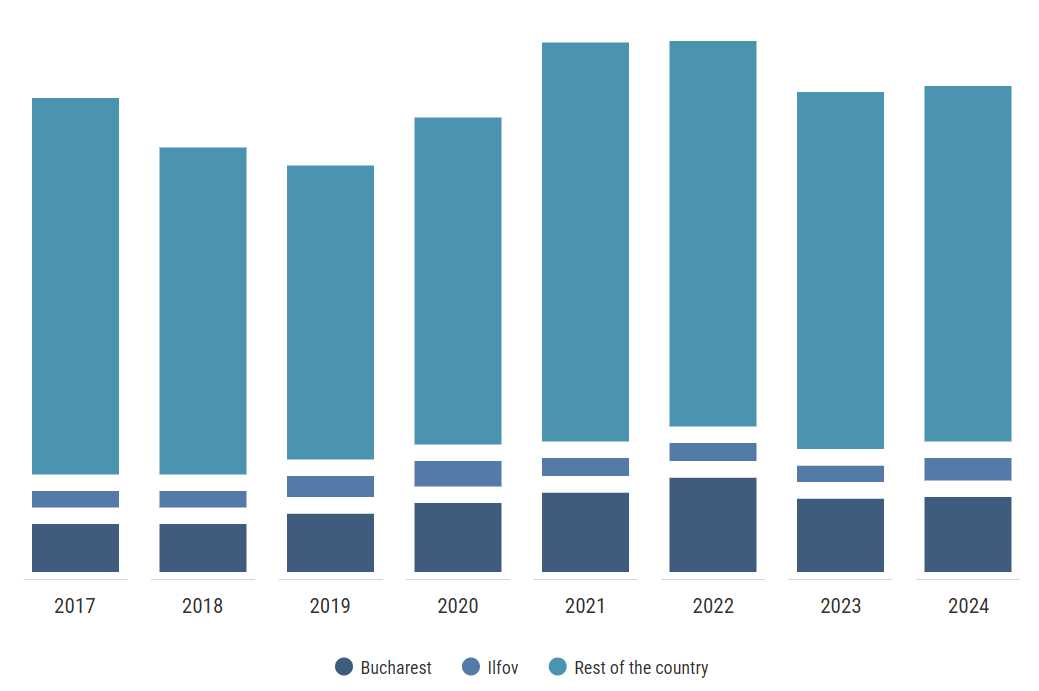
In order to attempt answering these questions, Dr. Sebastian Sipos-Gug, EECFA’s researcher on Romania, started by looking at permit data for a longer period and split by regions. The slowdown in 2023 and 2024 was present in most regions, but none of them was hit as hard as Bucharest where the useful area in residential permits nearly halved in 2024 compared to the peak of 2022. Thus, whatever effect led to the drop in permits, it disproportionately affected Bucharest.  While it remains by far the most active region, the drop is oversized when adjusted for its share of the market.

In case of Bucharest, a non-trivial amount of this effect could be explained by the gridlock in the urban planning area, with permits for all types of construction hindered by the cancellation in 2022 of the existing zoning plans which have yet to be replaced by newer versions. This makes it more difficult to gain permits for new developments, and could be, at least partly responsible, for the observed shrinkage in residential permits in the last two years.  

Figure 1: Useful area in residential permits, 2015-2024, Bucharest-Ilfov chart presented outside the map due to relative market size (Source: own calculations based on NSI data)

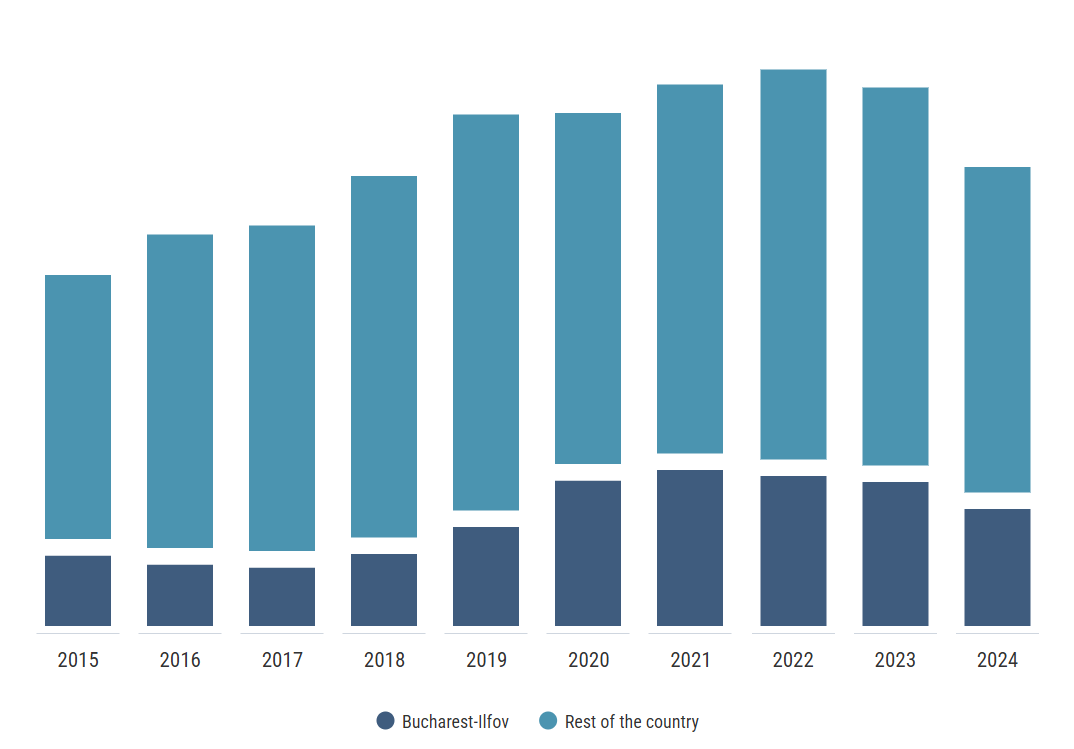
The next logical step seemed to be looking at other indicators such as completions and seeing what happened there. Indeed, they have also been on the decline with the number of completed homes country-wide in 2024 being comparable to that of 2018. Again, Bucharest-Ilfov saw a much larger drop in 2024 over the 2021 figures, standing at –33% compared to –12% in the rest of the country. 

Figure 2: Home completions between 2015-2024 (Source: own calculations based on NSI data)

The decline is quite apparent in the supply of new housing overall, but that the situation is much more dire in Bucharest.

The demand-side story

Could the decrease in supply be a response to lower demand? After all, if developers have difficulties selling stock, they are unlikely to start new projects.

Looking at the number of transactions, they indeed declined overall in 2024 compared to the peak of 2021, but the effect was much smaller with just around 10% fewer properties being sold in the whole country, while in the Bucharest-Ilfov region there was barely any change (-0.3%).

At the same time, prices of homes continued growing, but this time Bucharest (+20%) lagged behind the country (+27%), meaning that the price gap between the capital and the rest of the country is slowly closing.

Figure 3: Number of real estate transactions between 2017 and 2024 (Source: own calculations based on ANCPI data)

However, when comparing the growth in home prices to that of the rise in construction costs, the situation looks more dire. As of 2024, residential construction costs grew 41% over the 2021 level, far outpacing the increase in prices. This was partly due to increased materials costs (+32%), but also due to much higher labor costs (+60%) for construction workers. Since in January 2025 tax breaks for construction workers were eliminated and the minimum wage for them grew, it’s unlikely for the situation to improve in the short term, potentially discouraging developers from new investments until prices reach a place where they offset the costs and offer similar margins as before.

What does this mean for housing affordability?

This topic was touched upon last year, in another blogpost, with the conclusion that it is useful to look at affordability from two standpoints: cash buyers and mortgage takers, since increased interest rates can negate the effects of wage growth.

Taking a regional split into account this time, it’s noticeable, and perhaps slightly surprising that homes are more affordable in Bucharest as the wage gap between it and the country average is higher than the residential prices gap.

This took a turn, however, in 2024 as home affordability in Bucharest started to drop, while the national average remained more or less the same. If the previously mentioned issues that limit permitting are not resolved, we can expect this trend to continue in the future as well since a limited supply will mean higher prices.

Another factor that could limit future supply, at a national level, is developer funding. It used to be the case that developers would focus on presales and use very high downpayments in the project phase (up to 90% in some cases) to fund the construction work, without requiring a bank loan.

Since a high-profile scandal regarding a large developer brought this issue into the limelight, confidence in this type of arrangement has declined and buyers are less likely to accept paying high downpayments before construction has even started. Concurrently, there is a bill underway aiming to limit downpayments for unfinished buildings to 10%. Should developers resort to banking loans for their projects, it would make the market more stable but more expensive for them, leading to either lower margins, or higher prices.

Figure 4: Home affordability for cash buyers: sqm in an average 2-room apartment one could afford with average monthly net wage (Source: own calculations based on data from NSI and imobiliare.ro)

When it comes to home affordability for those using a mortgage loan, things are not looking better than they did last year. Inflation has proved to be stickier than expected, and the Central Bank is lowering reference interest rates slowly, meaning mortgages will continue to be relatively expensive in the near future.

While the higher wages in the capital again prove to be an advantage, making homes slightly more affordable than for the average Romanian, this indicator was also on the decline in 2024 for Bucharest, and stable for the rest, shrinking the gap between the two.

Figure 5: Home affordability for mortgage buyers: size of the home (in sqm) one could afford to buy with a mortgage loan, assuming a 25% downpayment, a 30-year term and a debt-to-income ratio of 40% of the average monthly net wage (Source: own calculations based on data from NBR, NSI and imobiliare.ro).

In the context of high energy costs, in 2021 construction costs increased. Since then, the situation has not improved dramatically, and it’s unlikely to change in the near future as inflation and high wage growth will keep an upwards pressure on them in 2025 as well.

Bucharest is doubly feeling the pain when it comes to new residential development. Adding to high construction costs, there are issues with urban zoning and permits approvals. The supply constraints mean higher prices, leading to slightly declining home affordability, especially for those relying on mortgages.

Figure 6: Construction costs for residential buildings (Source: own calculations based on data from NSI)

Croatian Construction: Whither, Whether, Weather or Wither?

Written by Michael Glazer (SEE Regional Advisors) and Tatjana Halapija (Nada Projekt), EECFA’s Croatian members

Ponderously thoughtful, long-form articles about current events are often entitled “Whither [name the country]?” as in where is that country going next? In that vein a perfectly good title for this (short) blog post would be “Whither the Croatian Construction Industry?”. But just as fine would be “Whether . . .?”, “Weather . . .?” and even “Wither . . .?”. Although probably not “Wether . . .?”. We’ll explain.

 Peljesac bridge, Croatia – Photo by Tatjana Halapija

Even late last year Croatia’s economic and political signals were very mixed. Business optimism seemed high: The European Investment Bank’s October 2024 investment survey showed 78% of Croatian firms to be optimistic about their overall investment plans, pretty much in keeping with the EU average of 80%, while business investments had increase by 26% compared to COVID-era levels.

Croatian tourism, a major source of income to drive construction generally and an important driver of construction output (hotels) in itself, was doing well by a number of key measures. In 2024, the country attracted 21.3M visitors, up 4% from 2023, and overnight stays rose to 109M, a 1% increase on 2023. Off-season results were especially impressive, with the January 1 to May 31, 2024, pre-season recording 11% more visitors than the year before and 12.5% more overnights, and the October 1 to December 31 post-season seeing 10.3% more visitors and 9.7% more overnights.

There were some worrying signs, however. Foreign tourist revenues rose only 1.7%, to EUR 13.2B, in the first nine months of 2024, far lower than Croatia’s inflation rate of about 4%, so actually a significant drop in real terms. The governor of the Croatian central bank notes that Croatia’s tourism prices have risen 50% since 2022 compared to 20% for the countries against which it competes for tourists. This bodes poorly for the future of Croatian tourism, as he points out, and so for Croatian construction output. Further, the European Commission forecasts a fall in Croatia’s GDP growth, from 3.6% in 2024 to 3.0% in 2025 and 2.9% in 2026, another negative for construction output.

So, considerable uncertainty in the construction sector even before 2025 brought new, complicating developments. These included new laws, among them laws imposing new taxes on real estate (foreign-owned real estate, too) and on tourism guest houses and new limitations on short-term apartment rentals. On the other hand, they also included simplifications of the building permit process and reduction of the percentage of owners required to authorize repairs and improvements to multiunit dwellings. The combined effect of these developments on construction output is hard to assess.

Most important, though, 2025 brought with it a new United States President and legislature keen to shake up the world economically and politically. In this they have succeeded beyond their most optimistic dreams. The threat for Croatia is that the result will be deeper and longer recession in Germany, the country on which it counts for much or its tourism revenues, or even worldwide, which would prevent Croatia from making up for lost European tourists by increasing its appeal to non-traditional visitors. Europe’s rush to build a powerful defense industry will be of little use to Croatia in offsetting losses of tourism revenues, since its defense industry is relatively small. Again, all in all a significant threat to the Croatian construction sector.

Still, EU money continues to flow to Croatia in large amounts, at least for the time being, and this should support not just civil engineering output (think railways and the electrical grid) but also building construction (repair and renovation of residences, offices and cultural objects). Further, the City of Zagreb is gearing up for major new construction projects now that it has its debt under control, and logistics facilities continue to be inadequate in number and size to meet demand. That said, Croatia’s frequent scandals regarding EU funds could reduce the stream of EU money that is so important Croatia’s public sector construction output.

All told, the tea leaves for Croatian construction output are very hard to read. We’ll know more by our 2025 Summer EECFA Forecast Report, particularly since Croatia will have held its municipal and regional elections by then. These will be a strong indicator of whether the current ruling party has outlived its welcome.

So, about those titles. It remains a very open question as to whether the many economic and political crosscurrents affecting Croatia will help or hurt the country’s construction output. One way or another, though, it seems likely that Croatia’s construction sector will weather the current uncertainties given the strength of the country’s tourism industry and the amount of EU money dedicated to the country. And while it’s certain that the sector will not wither, since it seems to have learned the lessons taught by the 2008-2009 Great Recession, it’s still not clear whether Croatia will become the GOAT of Mediterranean tourism destinations, a bell-wether for tourism so to speak, with all of the consequences that would have for construction in Croatia.

EECFA 2024 Winter Construction Forecast

EECFA released its 2024 Winter construction forecast on 16 December. Check out a sample report and purchase any of the 8 reports or the package of 8 reports at eecfa.com. For discounts, contact us.

Southeast European construction markets

Total construction output in Bulgaria is forecasted to grow by an average of 3.3% in 2024-2026, which is slightly above real GDP growth projections for the same period. The subsector breakdown shows that residential construction is expected to lose momentum, but this is likely to be compensated by a more dynamic performance of non-residential construction and civil engineering. In parallel, general economic activity in Bulgaria in the forecast period is to be influenced by the effects from the full membership in the Schengen area from 2025 onward and the prospects for the country to introduce the euro on 1 January 2026.

Croatian building construction presents a varied picture across subsectors, with anticipated output growth ranging from significantly positive to somewhat negative. Civil engineering is more uniformly positive, but certain sectors show the effects of the completion and commencement of large projects. Both building and civil engineering output growth will be strongly influenced by new government laws and regulations, the consequences of which, while likely to be large, are difficult to predict for both the short and medium terms. These include the new National Housing Policy Plan until 2030, the new tax on real estate and measures to balance the playing field between different types of tourism accommodations.

Despite the rise in investment, Romania will likely continue to see a stifled growth in construction in real terms due to costs remaining high. Stubborn inflation and the slightly disappointing macroeconomic performance combined with increased wages and still high interest rates create a less appealing environment for investors in building construction. On the bright side, high income and importsare indicative of strong demand for consumption and could translate to demand for construction. While infrastructure did well, the current political turmoil and uncertainty could hobble performance going forwards. Even assuming deficit remains high but stable, as the EC expects, it would continue to raise public debt and make financing further projects more politically difficult. As some downside factors could improve by then, construction growth is forecasted to return to positive in 2026.

Serbia’s construction is likely to have closed another strong year led by civil engineering, but non-residential also entered a new growth cycle with positive outlook boosted by public investments and the hosting of the EXPO 2027 in Belgrade. The construction of commercial, office and hotel buildings are all set to grow in the coming period, followed by education and health. Residential construction is already on historically high levels with a relatively stable performance. In civil engineering, road and railway construction continues unabated, breaking new record volumes on the way, but other segments also have an impressive project pipeline. The economy is set to expand by 4% in 2024 and 2025 on the back of strong consumption and high investment, so construction outputs may sustain formidable levels up to 2026.

Slovenia’s construction sector is expected to maintain post-pandemic levels with annual output consistently exceeding EUR 5 billion up to 2026 against the EUR 3 billion pre-pandemic. Public financing has been a key driver with national budget expenditure up from EUR 10 billion in 2019 to over EUR 15 billion in 2024, though there will be spending limits in 2025-2026. Civil engineering in the forecast period will be supported by major infrastructure projects. Residential construction is set to drop slightly first in 2024 before rebounding by 2026 driven by lower mortgage rates. Non-residential construction is forecast to grow steadily but remain dependant on the availability of public financing. Other challenges remain such as labour shortages, permit backlogs and high costs, but construction cost growth is set to stabilize at under 3% annually.

Eastern European construction markets

In 2024, the Russian construction industry fared better than previously expected driven by the high pace of project implementation and the massive budget support in civil engineering and non-residential construction. It could even offset the negative impacts of the decline in housing construction caused by the end of the mass preferential mortgage program. However, this positive momentum is expected to gradually fade owing to the tight monetary policy of the Central Bank and several other internal and external factors that are slowing down the economy in general and the construction industry in particular. In 2025-2026, the record budget expenditures planned within the framework of new national projects and other measures of state financing will likely maintain construction market volumes in Russia in the positive territory, but with minimal growth.

In Türkiye, increased interest rates and the Central Bank’s policy to reduce the depreciation of the national currency to curb inflation has not yet produced the intended outcomes. And high interest rates are blamed for shrinking industrial output and decelerated trade growth. The interest rate and the Central Bank’s policies had two major effects on the construction sector: big negative real rates of change in construction costs and housing prices. Housing sales are growing as real prices drop and rely on equity financing since mortgage loans have become unaffordable at high interest rates. Building permits in most segments decreased in Q3 2024, while completions had a positive trend. The government’s legal obligation to rebuild the earthquake-damaged 350 thousand buildings with 870 thousand independent units has been the main factor in huge budget deficits that impede the Government from providing sufficient funds for civil engineering projects.

As a consequence of the war ongoing for over 1000 days, Ukraine’s construction market is facing economic difficulties, limited resources, huge losses in buildings, hike in building material prices, lack of skilled workers and limited access to financing, topped with the unpredictability of government decisions and the instability of property rights. The destroyed homes of more than 1.5 million families create a huge demand. Non-residential construction also focuses on the restoration of destroyed buildings and the construction of new ones in safer central and western regions. Civil engineering is also boosted by the renovation of bridges, roads, railways, pipelines, communication and power lines. The ‘Unified portfolio of public investment projects’ recently approved by the government includes 750 big reconstruction projects on roughly UAH 2.36 trillion, while the state budget also has UAH 256.1 billion for public projects in 2025. First, the EUR 50 billion under the EU’s Ukraine Facility are to be used. Financing is also planned through international financial organizations and foreign governments. The priority is energy, transport, utility and public buildings such as schools.

Post-war reconstruction of Ukraine: plans and prospects

Written by Sergii Zapototskyi – UVECON, EECFA Ukraine

Ukraine has been defending its independence with weapons in hand for over 1000 days. Through blood and suffering, it has preserved its name on the world map and is gaining more and more respect as a nation of unconquered, proud and free people. And despite the war, life goes on and there is a constant need for reconstruction and restoration.

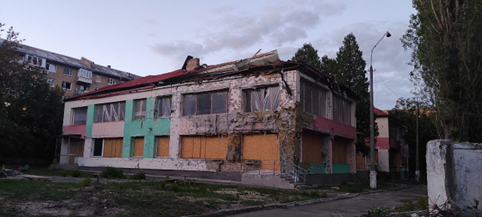
Destroyed kindergarten in Kyiv. Photo by Sergii Zapototskyi

In September 2024, the Deputy Prime Minister for Reconstruction and the Head of the State Reconstruction Agency were appointed, and in parallel, the government approved the ‘Unified portfolio of public investment projects’ which is a list of large-scale post-war reconstruction projects (750 currently) with an estimated UAH 2.36 trillion. At the same time, total funds of the State Budget of Ukraine for public projects in 2025 is UAH 256.1 billion where UAH 186.9 billion are receipts from international financial organizations and donors (loans, grants, state guarantees).

The priority is to increase the stability and the restoration of the energy grid of Ukraine and UAH 51.3 billion are earmarked for such public projects in 2025. Energy facilities in the portfolio include the construction of the 3rd and 4th units of Khmelnytskyi nuclear power plant on UAH 134 billion to provide an additional 2 GW of energy capacity. (The loss of energy capacity in Ukraine in 2024 alone has been about 9 GW). Another priority is the rehabilitation of hydroelectric power plants on over UAH 15.3 billion and a pilot project for hydrogen energy on UAH 413 million.

Transport projects are estimated at UAH 248 billion and the main ones include the completion of a concrete bypass road around Zhytomyr and the development of border road infrastructure on the Ukrainian-Polish border (Krakovets, Rava-Ruska, Yavoriv in Lviv region). The segment will also see metro development in Kharkiv and Dnipro, the development of seaports in Kherson and Odessa, as well as the restoration of civil aviation in the future like the reconstruction of airports in Boryspil (UAH 32.8 billion), Lviv (UAH 1.2 billion) and Chernivtsi (UAH 1 billion).

Besides these, they plan to build the National War Memorial Cemetery (UAH 7.4 billion), to provide housing for war veterans (almost UAH 20 billion) and for internally displaced persons (UAH 1.7 billion), and to centrally repair war-damaged housing (UAH 35 billion) and Okhmatdyt hospital (UAH 14.8 billion). There are also many renovation projects for schools, gymnasiums, and several projects to build new or renovate prisons and detention centers (e.g. a new pre-trial detention center in Kyiv region on around UAH 1.6 billion and the repair of a camp for prisoners of war in Lviv region on UAH 112 million). UAH 6.7 billion have been allocated for adaptation to climate change as well, and a dozen of waste processing plants will be built across Ukraine on over UAH 124 billion, including water purification systems.

On the one hand, this is post-war reconstruction through repairs and construction that have been postponed for years. On the other, this is a historic chance for the economy to start hundreds of new projects that will create a new quality of life for citizens through new jobs, better wages and social protection, greater accessibility to housing, education, and medical services.

Expenditures from the state budget for priority reconstruction works will be UAH 141.1 billion. Another UAH 115 billion is provided in state guarantees, which will allow borrowing money for construction from foreign partners. First, they plan to use funds under the Ukraine Facility program for EUR 50 billion financed by the EU. Financing is also planned through international financial organizations and foreign governments where the latter take patronage over the revival of Ukrainian regions. Local financing and others (public-private partnerships and various grants) are also included. Large-scale reconstruction could bring big foreign investors to Ukraine, mainly construction companies with their technologies and expertise.

Forecast for the whole construction sector of Ukraine will be available on 16 December in the new EECFA Forecast Report Ukraine that can be purchased on the EECFA website.

The Croatian hotel sector: Will it lead the way?

Written by Michael Glazer (SEE Regional Advisors) and Tatjana Halapija (Nada Projekt), EECFA’s Croatian members

The rate of growth in the number of foreign tourists visiting Croatia declined in 2024. This, combined with a more stringent tourism tax regime and inflation, is impacting hotel construction and the construction of other accommodation facilities. Will the hotel segment, which has boosted overall construction in Croatia in a variety of ways, continue to do so?

Supetar, Brač Island, Croatia. Photo by Tatjana Halapija

Croatia’s tourism growth is slowing down, at least in the high season and especially among foreigners. Year-on-year growth in overnights for the high season of July and August 2024 versus the same period in 2023 was 0.8% overall. While domestic tourist overnights climbed 10.0%, foreign tourist overnights stagnated, growing only 0.11%. This contrasted sharply with the much better numbers for May and June, for which overall overnights increased by 3.6%, with a 3.8% and 3.6% increase for domestic and foreign tourists, respectively. Figures for the year through August 2024 compared to that period in 2023 showed a rise of 1.6% overall, 7.2% for domestic tourists and 1.1% for foreign.

Revenues for the year through August 2024 were said by the Ministry of Tourism to have grown 11% over the same period in 2023. Subtracting August-2023-to-August-2024 inflation of 3.0%, this gives a real increase of 8.0% for the period. Meanwhile, total rooms and beds for tourists in Croatia rose 1.5% and 2.4%, respectively, in 2024 over their numbers in 2023. Occupancy data is not yet available for 2024, but the Minister of Tourism expressed the view that there is little room for further expansion during the high season, indicating that Croatia’s tourism infrastructure is reaching capacity during peak periods.

The question then is what all this means for hotel construction. While the data initially seem promising in this regard, there are a number of countervailing factors that suggest a less optimistic view might be appropriate.

Part of the problem in assessing the likelihood of robust hotel construction in Croatia is that the country is entering into a time of political and policy change. The tax regime for tourism is being modified, and in some important ways tightened, while the years-delayed property tax is again rearing its head. Higher this time than ever before, because the recent parliamentary elections theoretically give the ruling party years to tamp down property-owner wrath before it has to face the voters again. Unless, of course, the precarious governing coalition falls apart, bringing the date of electoral reckoning much closer. The upcoming presidential elections further complicate the picture, since the ruling party will not want to alienate voters before that election is held.

Of course, many of these factors affect the Croatian construction sector as a whole, adding to the normal uncertainty in forecasting its evolution. So does inflation, which is at last coming under control. Gradually. Significantly more gradually than the EU average, but the 2% goal is now at least within sight. That said, the consequences of inflation for many Croatians, and particularly for pensioners who make up 30% of the country’s population, have already been severe. They are now looking to recoup some of the losses in purchasing power that they’ve experienced. The government seems to have succeeded in threading the needle of combining pay rises for public sector workers with fiscal responsibility when it raised public sector salaries by more than 20% prior to this year’s parliamentary elections. It remains to be seen if it can do so with the inflation-related demands on its resources.

Croatia’s hotel sector is in itself an important influence on the country’s construction sectors. Its income provides tax revenues that fund government construction projects, and the payments that it makes to employees and suppliers provide the means for them to invest in, among other things, buildings and other construction. Accordingly, the 8% real increase in hotel income is likely to boost construction overall, at least to an extent. How much requires more data (e.g., more up-to-date hotel income figures) and further analysis.  

There’s also the question of how much the increase in hotel income reflects the fortunes of non-hotel tourism accommodation providers. It’s not clear that they have done as well as the hotels in this regard. This is important, because they provide by far the majority of tourist beds. Their construction projects are individually more modest, but they do add up.

We should know considerably more by the time we prepare our 2024 Winter Forecast Report (available on 16 December). This additional information that we will collect by then will guide us in assessing the potential for hotel and other tourist accommodation construction. It will also help us to evaluate the actual strength of the current Croatian tourism season and the likely strength of the coming one, important influences on the output potential of the Croatian construction industry in its entirety. 

Life after the preferential mortgage scheme in Russia

Written by Andrey Vakulenko – MACON, EECFA Russia

The biggest preferential mortgage scheme in the history of Russia, a temporary response to the pandemic in 2020, lasted much longer than planned. The market got accustomed to relatively low rates, prices rose sharply, and mortgages became the main tool for purchasing homes. However, external conditions changed dramatically in the meantime, and this summer the program was phased out. Housing demand immediately collapsed, and the main question now is whether the market will be able to find balance, or the current problems are just the beginning of a major crisis.

The saga of the preferential mortgage scheme

Even though the Russian housing market developed well in the pre-pandemic period, in 2020 the pandemic (lockdown, decline in the economy and in the population’s income) threatened the construction industry. Hence the state program to subsidize mortgage rates. Such programs existed before but only targeted certain groups (e.g. families with children). The new scheme in 2020 was large-scale with no restriction on the type of buyer and was to support demand and ensure stability in the housing market that is one of the key construction segments in Russia.

But good intentions soon turned into problems. The impact of preferential mortgages on demand was disproportionately big: buyer activity soared against the backdrop of a relatively short lockdown and a more-favorable-than-initially-expected dynamics of the economy during the pandemic. Increased demand led to a surge in the cost per square meter. Many investors took out mortgages to make money on rapidly rising prices. Initial savings on loan interest at the start of the program were quickly exhausted due to growing prices. Eventually, the preferential mortgage program, designed to support the solvency of home buyers, reached the exact opposite: it sharply reduced the availability of new homes for them, so much so that it is now at its lowest level of the last 15 years. Another key problem was the excessive length of the scheme. It was kept in the post-pandemic period and extended several times, continuing to stimulate demand and price growth (although conditions were revised to be stringent). So, the market became dependent on state participation and ensured affordable mortgage rates for all types of buyers.

By early 2024, the preferential mortgage scheme started to show side effects such as structural market imbalances (secondary housing became significantly cheaper than primary housing as the secondary market did not have such support), increased indebtedness of the population, and the risk of a primary housing market bubble. The drawbacks of the scheme gradually began to outweigh its benefits. However, either the continuation or the abrupt phase-out of the program would have damaged the market. Yet, external conditions have become extremely difficult, and rising inflation has contributed to a sharp tightening of monetary policy. The key rate of the Central Bank of Russia has increased from 7.5% to 19% since last summer and is now at historical highs. At the start of the scheme in 2020, market mortgage rates were at 8%–9%, and the state subsidized them to 6.5%. In 2024, mortgage rates on average grew to 20%-21%, while the program allowed borrowing at 8%. Because of this, government spending on subsidizing mortgage rates under the scheme soared, and its final cancellation was only a matter of time.

What is happening now

The large-scale preferential mortgage program, officially phased out on 1 July 2024, was the most massive demand support in the history of the Russian housing market: 1.6 million loans were issued for a total of about RUB 6 trillion. Now state support for housing has become more targeted through the introduction of other mortgage programs:

  • Family Mortgage Scheme for families with children
  • IT Mortgage Scheme for employees of IT companies
  • Rural Mortgage Scheme for homes located in rural areas
  • Far Eastern Mortgage Scheme in the eastern and Arctic regions of Russia.

These, however, due to their narrower audience and stricter conditions, will not be able to fully compensate for the cancellation of the preferential mortgage program. The record high key rate makes general market rates effectively prohibitive. In monetary terms, the number of issued mortgage loans in July 2024 dived by 55% over June 2024. The volume of accumulated debt on mortgage loans this July decreased for the first time since 2019. The number of transactions in the primary market (in construction projects) sank by 51% this July against this June and continued to decline this August by another 13%.

Despite reduced demand, there is very high developer activity which has been breaking records for 7 months in a row. At the beginning of September 2024, about 117 million sqm of multi-unit residential buildings were under construction. And growth in supply amid reduced demand creates risks of market oversupply in the future.

What happens next

The end of the preferential mortgage program was planned to take place in a period of low market mortgage rates, but the gap between market rates and preferential rates had been growing steadily and reached record levels this year. Thus, due to the cancellation of preferential mortgages, demand in the market crumpled. It is aggravated by the expected continuation of a tight monetary policy, at least throughout 2025. The projected level of the key rate for this period is 14%-16%, so market mortgage rates will remain high in 2025, exerting strong downward pressure on demand.

Since the mortgage loan became the main instrument for home purchases during the scheme, demand could only be activated if we returned to those rates. The targeted mortgage programs mentioned above partly do so, but they will not be able to fully replace the large-scale preferential one. The most significant, though, Family Mortgage, was extended this July until 2030 with some restrictions: the program now applies mainly to families with a child under 6 years of age (and two other smaller groups of the population[1]). The number of families with children under 6 as per the latest census (2020) was about 7.1 million, but the number of potential borrowers until 2030 will plummet owing to the deceleration in birth rates (an average decline of 4% per year over the past 5 years) and the limitation of the program itself (it can only be used once).

Therefore, demand in the housing market does not have any clear prerequisites for growth in the coming years, and the volume of unsold supply will likely accumulate. Yet, existing schemes might develop, and new ones might be launched, which one way or another might support buyer activity and the entire residential market:

  • New targeted mortgage programs might be introduced based on professional or geographic criteria (public sector employees, representatives of professions valuable to the state, scarcely populated areas, etc). They will not carry the risks of market overheating or bubble since they exclude the purchase of homes for investment. But with high key rates, any such program requires huge state funding, so their introduction in 2024-2025 is unlikely. 
  • New payment schemes might be launched. The popularity of tranche mortgages[2] and various instalment programs is growing, and savings schemes are also being discussed (banks might introduce special target mortgage deposits on which buyers could accumulate funds for home purchases with partial co-financing from federal or regional authorities).
  • The flexibility of mortgage products might grow. Banks are starting to offer borrowers the inclusion of a clause in loan agreements to guarantee a reduction in mortgage rates when the key rate falls. That is, if the key rate drops in the duration of the agreement, the bank reduces the mortgage rate without having to conclude a new agreement.

Direct discounts or a major reduction in the cost per square meter are unlikely though since developers are constrained by the highly increased construction costs in 2022-2024 and will not agree to a considerable decrease in prices. Thus, in the coming years we can expect a reduction in new residential projects launched.

Currently, the housing market in Russia, for an indefinite period, is becoming to be dominated by buyers who qualify for one of the targeted mortgage schemes and whose list will be determined by the state. The game-changer might either be a pronounced and long-lasting increase in the population’s income or a drop in the key rate and, accordingly, market rates on mortgage loans, which is unlikely at least in 2024-2025. Therefore, residential construction volumes will likely decrease. A more detailed forecast on the residential market and the entire construction industry of Russia can be found in the current EECFA Forecast Report Russia that can be purchased on our website.


[1] Families with a disabled child and families with two or more children aged 7-17 living in regions with low housing construction activity (35 regions of Russia) or in a small town (with a population of less than 50,000).

[2] The bank issues a mortgage loan to a client for purchasing a home under construction in several parts. The total loan amount is divided into several tranches (the borrower has a minimum loan payment until the new building is put into operation).

Türkiye’s quake reconstruction efforts taking their toll on the economy

Written by Prof. Ali Türel, EECFA Türkiye

One and a half years after the devastating quakes that shook Türkiye, rebuilding is slow, and the public money spent on the reconstruction of damaged buildings and infrastructure are causing massive budget defi­cits in Türkiye’s economy. It is topped with high inflation, increased interest rates, growing unemployment and a stagnant minimum wage. With the current pace of construction, it seems that the reconstruction of 870 thousand units will take two to three additional years.

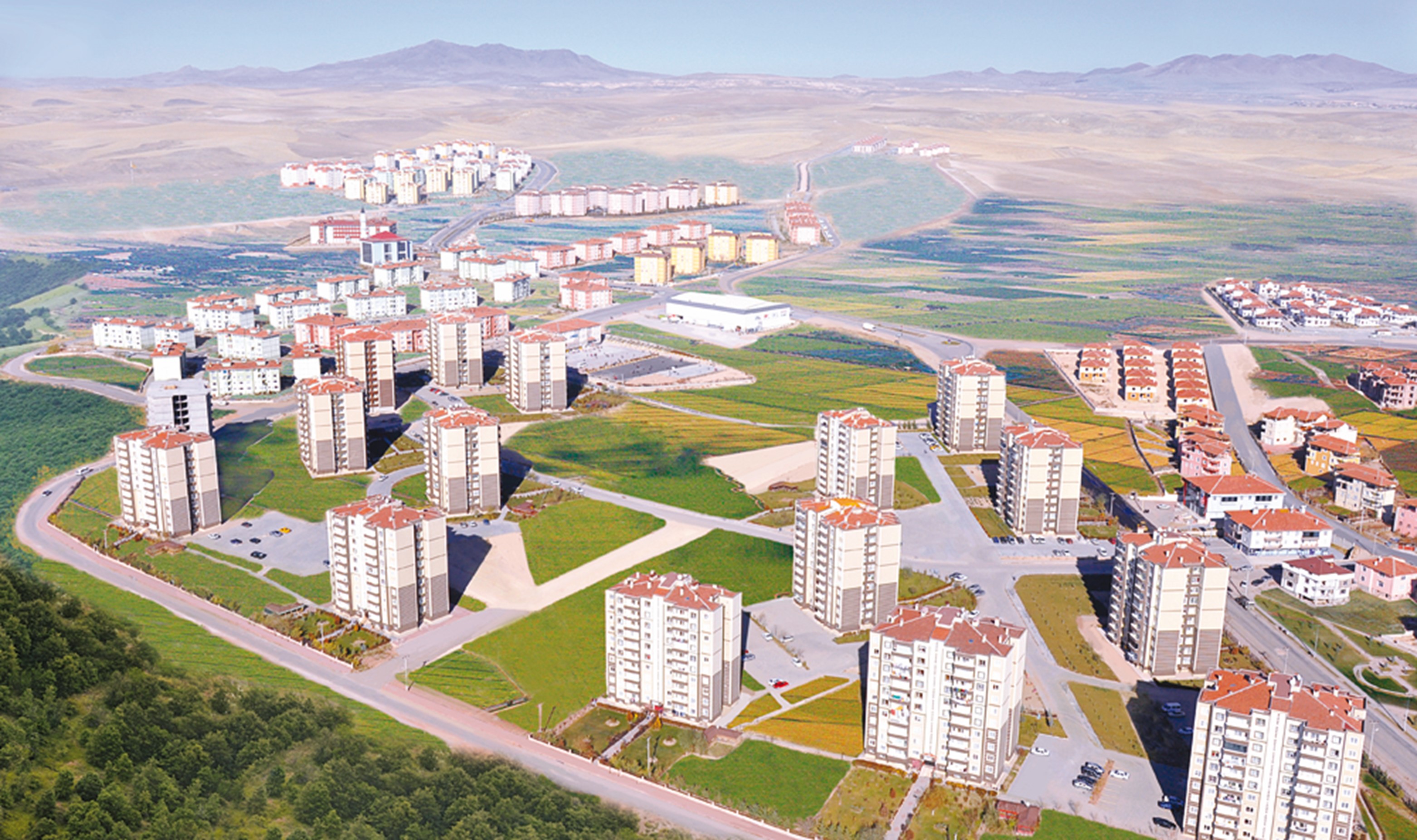
Owner-occupied social housing project of the Housing Development Administration (TOKI) that is in charge of rebuilding in earthquake-hit regions. Photo with the permission of TOKI

What happens in Türkiye’s economy

Türkiye’s economy continues to have a bad time due to high inflation despite conventional economic policies put into effect after the re-election of President Recep Tayyip Erdoğan last May. In the following 10 months the Central Bank of Türkiye (CBT) increased the base rate from 8,5 points to 50 points and since then it has remained at that level. Bank interest rates followed suit, causing affordability problems for mortgage and consumer loans.

In July 2024, monthly and yearly rises of Consumer Price Index were 3,23% and 61,78%, and in Domestic Producer Price Index 1,94% and 41,37, respectively. The latest inflation forecast of the CBT at the end of the year is between 38% and 42%. Policies to curb inflation began to show their negative effects on the economy as Calendar Adjusted Production Index of Total Industry fell by 4,7% and Manufacturing by 6,9% in June 2024 from June 2023. Seasonal and Calendar Adjusted Index also dropped in June 2024 from the previous month by a respective 2,1% and 3,1%. Unemployment grew by 7,2% in June 2024 and rose to 9,2% as 234 thousand people lost their jobs within one month. GDP is also predicted to decline in Q3 and Q4.    

Wage increases are curtailed within the scope of the economic program to keep inflation under control. The minimum wage did not rise for the whole second half of 2024, despite Consumer Price Index rose by 24,73% in the first 6 months. Income levels of pensioners, most notably of those in the lowest income segment, have been a much-complained issue in recent months. This is also aggravated by the low retirement age that was further reduced by a law enacted in 2023. The high number of retired people to total employment necessitates increasing transfers from the national budget to the Social Security Institution.  

How reconstruction efforts stand 1,5 years after the quakes

Rebuilding damaged housing, workplaces (industrial, commercial and other uses), and infrastructure following the earthquakes on 6 February 2023 requires massive investments from the national budget. Big budget deficits under these circumstances lead to increases in the public sector’s borrowing requirements. Civil engineering projects are worst affected by the financial strain on the national budget owing to the state’s legal obligations in rebuilding structures damaged by natural disasters.

The reconstruction of buildings and infrastructure is estimated at EUR 100 billion. As an alternative to the direct provision, the government introduced a financial assistance: 1.500.000 TL (44177 Euro) loan with a 50% grant to people either building an own house or buying one.

According to Murat Kurum, the recently reappointed Minister of Environment, Urbanisation, and Climate Change (the organization responsible for rebuilding collapsed and pulled down or heavily damaged buildings):

  • in the first 3 months of 2024, the construction of 76 thousand dwelling units was completed and transferred to their owners
  • the target for 2024 is to complete 200 thousand dwelling units by the end of the year
  • monthly expected completion is 25-30 thousand dwelling units

It implies that rebuilding 870 thousand independent units (650 thousand housing, 170 thousand workplaces) may continue for 2 to 3 more years.

Building and housing developments as of Summer 2024

In Q2 2024, construction permits for buildings in total floor area nosedived by 30,9% from Q2 2023 and the yearly change was a 32,9% rise in Q1 2024. In housing permits the yearly fall in the number of units in Q2 2024 was 28,9% (against the 34,3% growth in the previous quarter).

Occupancy permits for buildings in Q2 2024 sank by 14,4% in total floor area, and 23,5% in the number of dwelling units from Q2 2023. Like starts, the yearly rates were 45,5% and 38,9% growth in Q1 2024, respectively. Thus, it can be said that policies to curb inflation also create negative effects in building production.

Housing Price Index grew by 38,7% at current price yearly in July 2024, showing a 14,3% drop in real terms. The rise in housing prices was much less than construction cost in the previous month; Construction Cost Index increased yearly by 66,12% in June 2024 when Consumer Price Index rose by 71,60% and Domestic Producer Price Index by 50,09%. June 2024 was the first month over many years that the yearly rise in Construction Cost Index was less than Consumer Price Index. The rise in labour cost, 105,50%, is pushing total construction costs upward, and material prices, with a 51,55% rise, downward. Curbing minimum wage increases until the end of 2024 may be expected to lead to a lower rate of change in the construction cost in the following months.

In July 2024 housing transactions comprised 127,088 thousand (+16% like-for-like). Between January and July 2024, the number of dwelling units sold was 672,162 thousand, only 0,5% less than in the same 7 months of 2023. The main difference was in mortgage sales (only 9% of total sales in July 2024), and 9,4% in January-July 2024, dropping by 20.9% and 53,8% from the same months last year. Such great falls in mortgage sales are related to decreased affordability for mortgage loan repayments of commercial banks between 3,05 and 4,20 monthly interest rates for 10-year term mortgages. Subsidized mortgage loans by state-owned banks at 0.69-0.99% monthly rates to people who are not homeowners did not greatly affect the share of mortgaged transactions. 

Forecast up to 2026 for the Turkish construction market is available in the EECFA Forecast Report Türkiye 2024 Summer. To order it or to request a sample report, please contact us.

EECFA countries in the European Commission’s 2024 Macro Forecast

Written by Tünde Tancsics and Dóra Barát – ELTINGA-EECFA Research

Similarly to every summer, this summer too we have looked at how the European Commission sees our countries. Here is how GDP, investment and construction investment forecast have changed in the past half year.

Between Autumn 2023 and Spring 2024 economic outlook has improved for the majority of countries in the Eastern and Central Eastern European region (EECFA countries) for 2024-2025. Exceptions only included Türkiye, Romania and Hungary (this latter is covered by Euroconstruct), but the deterioration of the outlook was minimal. Expected GDP growth also decreased in case of the EU and the Eurozone.

Economic growth in the examined countries is expected to be between 2.3% and 3.9% by 2024-2025. The largest GDP expansion is related to Serbia, while Russia’s economy may grow least. At the same time, the expansion in the countries of the region is set to be much higher than in the EU and the Eurozone where projected GDP growth is only 1.1% and 1.3%, respectively.

Projected gross fixed capital formation (GFCF) growth rate for 2024-2025 sank in the majority of the countries by Spring 2024 from the previous level in Autumn 2023 with the only exceptions being Russia and Serbia. In Russia, a slight increase was seen from Autumn 2023 to Spring 2024. Prospects in Serbia significantly improved and next to Romania, its growth rate became the highest (6,45%) in the Eastern- and Central Eastern-European region (EECFA countries).

Expected GFCF (investment) growth is also high in Hungary, 4.9%, while for the other countries in the region, projected GFCF increase in 2024-2025 is between 3.05% and 3.6%. In the EU and the Eurozone, a much more modest expansion is estimated than in the region; GFCF prospects decreased from Autumn 2023 to Spring 2024, and they are only 1.15% and 0.85%.

Growth rate for investment into construction for 2024-2025 improved in Croatia, Hungary and Bulgaria, while in Romania, Slovenia, and in the EU and the Eurozone the outlook deteriorated from Autumn 2023 to Spring 2024. When it comes to the EU, growth is foreseen to be close to zero, whereas in the Eurozone a slight drop is projected for 2024-2025. The predicted growth for investment into construction in Spring 2024 was the highest in Romania (8.05%), followed by Hungary, Bulgaria, Slovenia (between 4.1% and 4.4%) and Croatia (2.45%).

This above represents the Commission’s view and it is different from ours at some point. It might be because our focus is exclusively on construction. For each segment we come up with an individual story and this is how the total construction market is formed. The latest predictions are in the 2024 Summer EECFA Construction Forecast Reports. Sample report and order: eecfa.com

As we see, Türkiye and Croatia could be top performers, while Russia and Romania are forecast to shrink. Although the Ukrainian growth rate is impressive it is because the market is coming back from a very low level.

EECFA 2024 Summer Construction Forecast

EECFA, our construction forecasting cooperation in Eastern European countries, released its 2024 Summer construction forecast on 25 June. View a sample report and buy any of the 8 reports or the package at eecfa.com. For discounts, contact us.

The expansion phase was over in 2023 in SEE as a whole, but the current contraction is not foreseen to last as long as the latest one after 2008. By 2026 this region could return to around its previous peak. The EE region as a whole is expanding, and we are still optimistic all the way on the horizon.

A closer look reveals that only Romania, the largest market, is behind the overall setback of the SEE region. Here the previous peak is not expected to be reached soon. Elsewhere in the region further expansion is our current view. Serbia’s trajectory is a bit different, but the market could stay at a high level despite the drop next year. Recovery in Türkiye is forecast to be so strong that it could well counterbalance a shrinking Russia. Ukraine is coming back from a very low level, hence the relatively good growth figures.

Southeast European construction outlook up to 2026

Bulgaria’s economy is set to grow by almost 2% in 2024 and 3% in 2025, while the country is heading to a eurozone membership, most likely in 2026. In parallel, construction output is forecasted to decline year on year in 2024-2026 due to expected drop in residential construction and heterogeneous, yet positive performance of the non-residential one. Civil engineering bears a potential for an accelerated growth if EU funds’ absorption bounces back and public investments in infrastructure speed up. 

Croatian civil engineering is moving into even higher gear now, especially with the recent update to the TEN-T Network, which greatly benefited Croatia. Accordingly, output in most civil engineering sectors will rise. Building output presents a more mixed picture, with some sectors having reached or come close to peak output, while others are thriving.

The outlook for Romania’s construction sector remains negative this year. Inflation is shrinking, but more slowly than desired, keeping interest rates relatively high for longer and impacting financing costs. Also, the switch between the EU programming periods, combined with still high construction costs and an election year, will mean lower efficiency in starting and implementing long-term projects. Because the macroeconomic outlook is good and if the other issues are resolved, by 2026 construction might start growing again.

Serbia is expecting to see more stabilization in the construction sector this year, with both building construction and civil engineering estimated to stay in the black. The latter is very close to recording a consecutive double-digit growth in 2024. The economy is picking up, interest rates are slowly receding, so there is confidence that construction can sustain high output levels. Demand stays relatively strong, while stable prices are to keep investments high this year.

Slovenian construction is forecasted to surpass its record 2023 output this year and continue its growth trajectory into 2025, exceeding EUR 6 billion for the first time. Major civil engineering projects will likely drive this growth, bolstered by flood reconstruction efforts. Public investment in housing is planned but is contingent on future public funding availability that will also impact non-residential construction. The industry faces workforce shortages, but increased immigration and declining construction costs are expected to mitigate these issues, supporting further growth.

Eastern European construction markets of EECFA up to 2026

In Russia, the increase in people’s solvency, the restoration of business activity and dynamic economic development ensured growth in construction output last year, but recovery trends are slowing down owing to both external restrictions and internal negative factors. The residential and civil engineering construction subsectors remain key for the industry, but their dynamics depend on the level of government participation and the volume of allocated budget funds. Even though negative trend is forecasted for the residential subsector in the coming years, the drop in overall construction output in 2024-2026 is not predicted to be significant as the market will be supported by the construction of export infrastructure projects.

Türkiye’s economy has been greatly affected by last year’s earthquakes that caused great human and material casualties, requiring the rebuilding of destroyed homes, workplaces, and infrastructure. The government’s costly obligations coincide with a return to conventional economic policies that require austerity. Massive reconstruction spendings have caused huge budget deficits and civil engineering is worst affected by this. Increased interest rates have created affordability problems for bank loans, mostly mortgage ones, so home purchases rely mostly on equity financing and serve as a hedge against inflation. Home permits in Q1 2024 rose due to permits issued in earthquake-hit regions. This, and the private sector’s returning appetite in most commercial building segments, aligns with the expected high GDP growth.

Ukraine is making great progress in overcoming the consequences of the full-scale invasion, showing economic growth. The issue of reconstruction is acute, though. The main problems in the market are rising prices and shortage of building materials, growing costs of logistics and a shortage of skilled labour. In energy the immediate restoration of energy generation facilities is required to provide stable electricity. State and international programs for the restoration and construction of housing will likely contribute to the revival of the construction market. In the coming years, the future of the market, more than ever, will depend on three things: results on the battlefield; Ukraine’s subjectivity in the international arena; and the ability to protect its interests against Russian diplomacy.