Written by Dr. Sebastian Sipos-Gug – Ebuild srl
The value of newly started construction projects in Romania was much lower in the first half of 2026, according to the latest EBI Construction Activity Report Romania, with Project-Start in decline across almost every submarket. “Q1 was relatively strong, but not enough to change the overall downward trend. A combination of economic slowdown, persistent inflation, elevated interest rates, and reduced public spending continues to constrain the market” – says Dr. Sebastian Sipos-Gug.
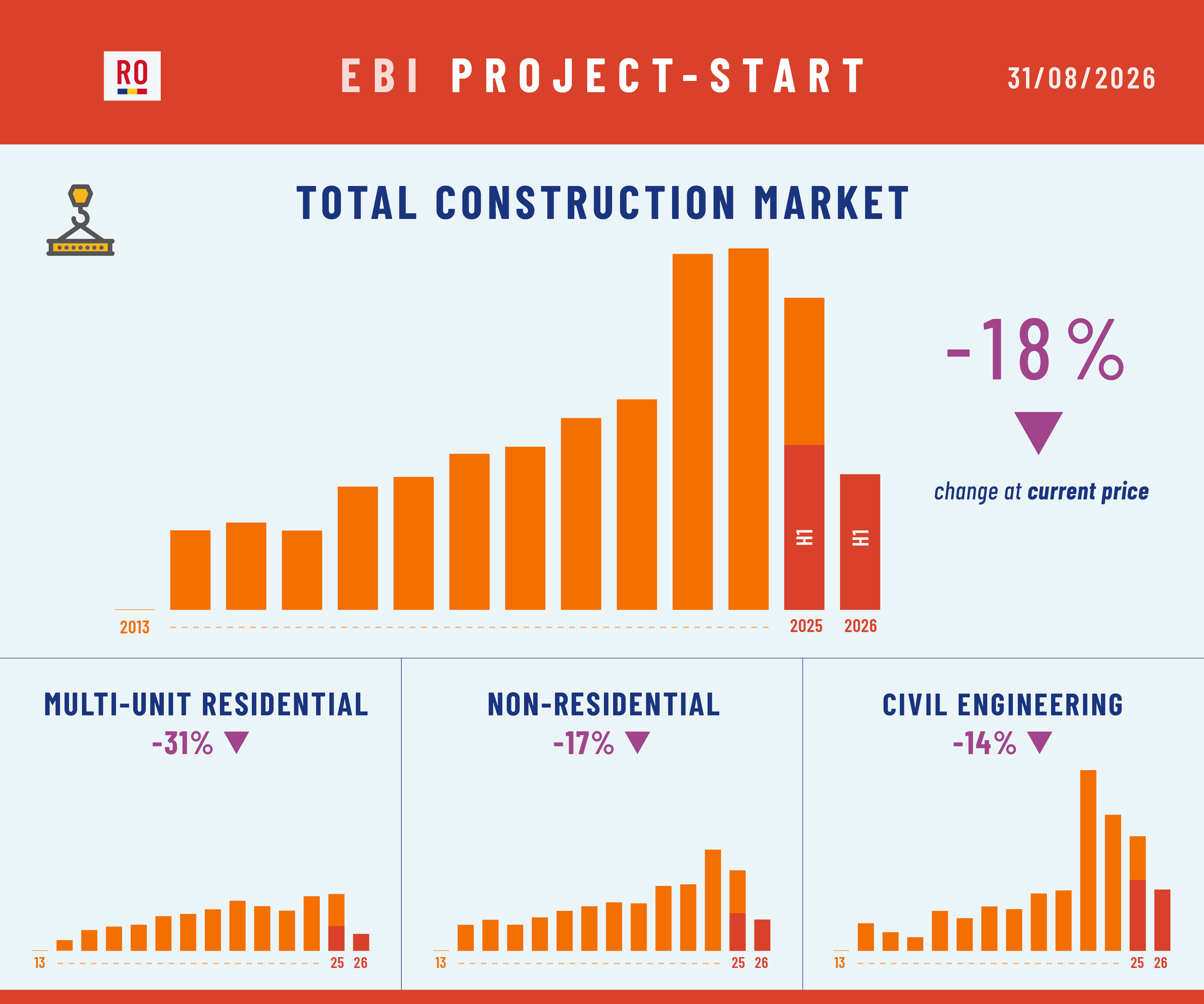
The total value of commenced multi-unit residential projects experienced the largest drop (-31% compared to H1 2025) as developers face more difficult financing terms and cooling market demand. Home prices are rising more slowly than inflation or construction costs, which also makes residential projects less appealing for speculative development. The ransomware attack on the land registry database also hindered new construction, since it froze property transactions, mortgage contracts, land surveys and construction authorizations for weeks. As the administration will have to handle the backlog created during the shutdown in addition to new requests, the situation is unlikely to improve for the remainder of the year.
Project-Start also fell in case of non-residential construction, though at a more moderate pace (-17% year-on-year). Performance within the submarket was uneven: publicly funded buildings, particularly in healthcare and education, were behind much of the decline as government investment comes under strain from austerity measures and the focus on ongoing NRRP-funded projects. The private sector is showing signs of strong resilience, as evidenced by the detailed breakdown in the report (for instance, the remodeling of mall Palas Iasi started in Q2 2026, at an estimated value of EUR 80mln), and could help the submarket weather this period of poor performance.
The infrastructure submarket fared the best of all three, but it still declined significantly (-14% year-on-year) since new projects took a backseat in favor of completing existing works, with the administration focused on increasing absorption before the August 2026 NRRP deadline. The ongoing government crisis has further complicated both the launch of new projects and the financing of those already underway, but a ramp up of the 2021-2027 EU funding programs could help sustain the submarket by the end of the year. For instance, in H1 2026 construction started on the renovation of one of the oldest railroad connections in the country: Bucharest North – Jilava – Giurgiu North – Giurgiu North Border (55 km), with EUR 423mln co-funded from the CEF 2021-2027 budget.
EBI Construction Activity Report Romania analyses the construction industry on a quarterly basis, including the volume of newly started construction works and the value of projects completed in each quarter in aggregate and by segment as well. It is prepared by Eltinga, Buildecon (creation of indicators and development of algorithms for aggregation) and iBuild (project research and project database). We have renamed our indicators for the sake of easier understanding; from now on we refer to the total value of started/completed construction works as Project-Start/Completion. To get the report, please contact us.