Good news from Türkiye: permit data for rebuilt earthquake-damaged housing included in statistics

Written by Prof. Ali Türel, EECFA Türkiye

Rebuilding permits, previously excluded from TurkStat’s statistics, were published on 22 August this year. The addition of statistics on rebuilding damaged housing in earthquake-hit regions raised building permits and completions in Q2 2025.

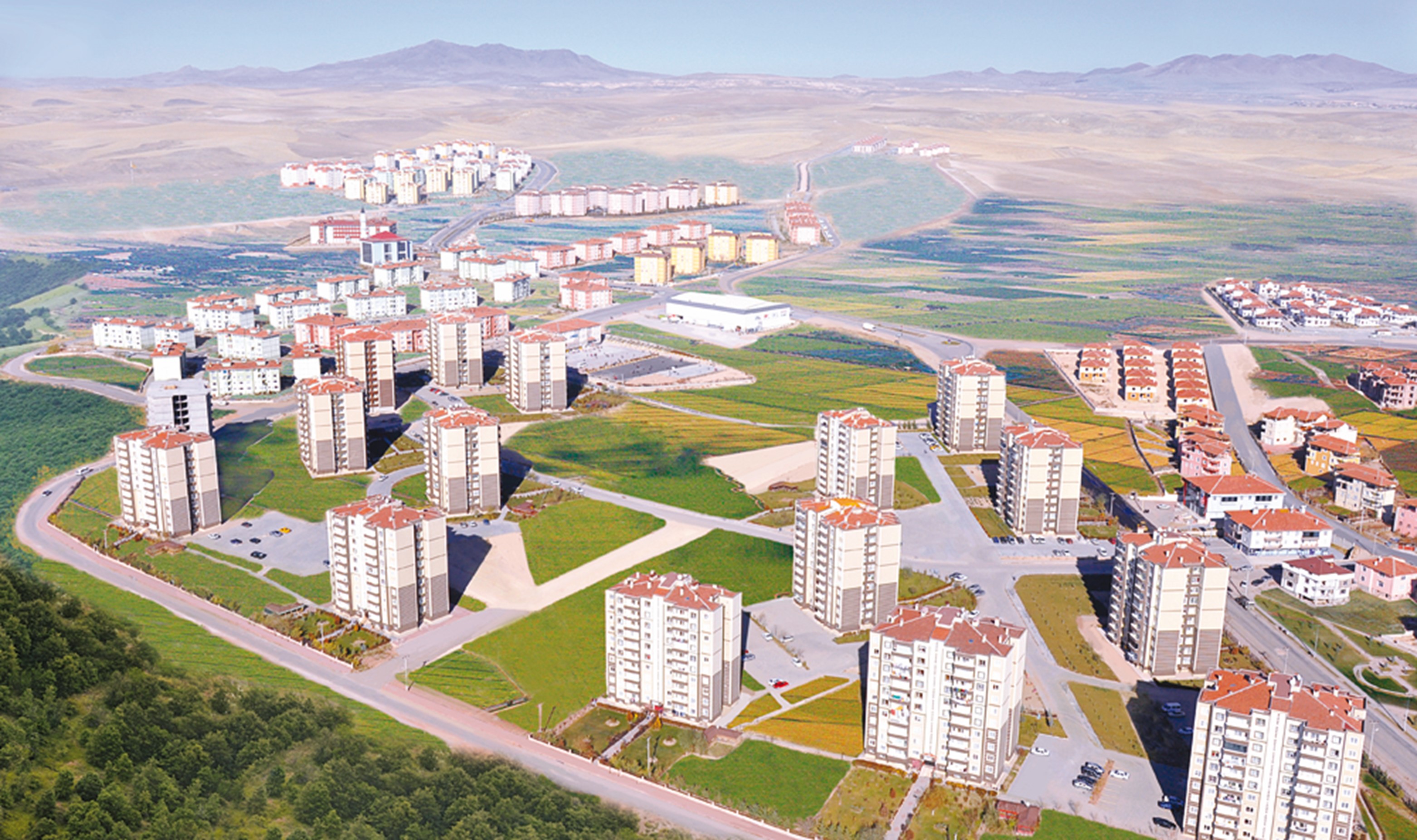
Video by TOKI (Housing Development Administration): Construction projects implemented by TOKI in the earthquake zone in Türkiye.

This May and June saw high construction production in Türkiye

The Calendar Adjusted Index of Construction Production increased by a respective 20,4% and 24,9% in May 2025 and June 2025 compared to the same months of 2024, after declining in the previous three months. Building construction went up by slightly higher rates, 23,5% and 16,9%, while civil engineering grew less, by 9,9% and 16,7% in May and June 2025.

Construction also had high shares in the Turkish GDP. The Seasonal and Calendar-Adjusted Gross Domestic Product in the chain-linked volume index for construction in Q1 2025 expanded by 7.4% annually, while the national average GDP growth was 2,7%. The rise in construction within GDP began after the destructive earthquakes in February 2023. The rebuilding of approximately 870,000 independent units, including 650,000 dwelling units and infrastructure, started in the following months, and the growth rate of construction in GDP increased to 7,2% in 2023 and 9,3% in 2024.

In Q2 2025 we may expect a higher growth rate for construction than in the previous quarter since the completion of 250 thousand dwelling units has been reported until June 2025. Also, a total of 453 thousand urban and rural housing and workplaces will be handed over to legal beneficiaries by the end of 2025 (Source: Anatolian News Agency).

However, building start and completion statistics did not show the same trend in Q1 2025; the total floor area of construction and occupancy permits fell by 20% and 24,9%, respectively, compared to Q1 2024.

Rebuilding statistics in earthquake-hit regions added on 22 August 2025

Q2 2025 saw a sharp reversal of this trend with the addition of rebuilding statistics of damaged housing in earthquake-hit regions. We have been following the process of inclusion of the rebuilding statistics into TurkStat’s published statistics, and we are happy to see that it was published on 22 August 2025.

The delay of including rebuilding statistics can be linked to the effects of law 7471 which aims to speed up rebuilding damaged structures in earthquake-hit regions. The responsibility of the Ministry of Environment, Urbanization, and Climate Change in rebuilding damaged housing caused by natural disasters is further supported by this law. The Housing Development Administration (known as TOKI in Turkish), affiliated with that Ministry, handles the implementation and financing of rebuilding projects. The Ministry’s local branches have been issuing construction and occupancy permits in earthquake-affected regions as outlined in the same law. TurkStat collects and publishes building permit statistics issued by municipalities and transmitted online to them. Since the local branches of the Ministry were not part of this network, rebuilding permits were not included in TurkStat’s previously published statistics. The table is based on the revised statistics and there may still be further revisions in future publications if there is missing data in current rebuilding statistics.

Building permit
floor area,mln m2
Building permit
annual change,%
Occupancy permit
floor area,mln m2
Occupancy permit
annual change,%
2023197,5616,7118,80-15,6
2024180,27-8,7138,2116,4
Q1 202535,24-20,031, 25-24,9
Q2 202554,3661,827,2030,2
Rebuilding permits in earthquake-hit regions. TurkStat has revised the data by including permits of all authorized administrations to issue building certificates.

Less building construction activity without rebuilding works can be related to the high-interest rate policy to curb inflation, currently at a 43% level. Both producers and credit users have problems in production and purchasing produced goods without relying on bank credits. Lowering inflation and interest rates would lead to the stimulation of building construction.     

Türkiye’s quake reconstruction efforts taking their toll on the economy

Written by Prof. Ali Türel, EECFA Türkiye

One and a half years after the devastating quakes that shook Türkiye, rebuilding is slow, and the public money spent on the reconstruction of damaged buildings and infrastructure are causing massive budget defi­cits in Türkiye’s economy. It is topped with high inflation, increased interest rates, growing unemployment and a stagnant minimum wage. With the current pace of construction, it seems that the reconstruction of 870 thousand units will take two to three additional years.

Owner-occupied social housing project of the Housing Development Administration (TOKI) that is in charge of rebuilding in earthquake-hit regions. Photo with the permission of TOKI

What happens in Türkiye’s economy

Türkiye’s economy continues to have a bad time due to high inflation despite conventional economic policies put into effect after the re-election of President Recep Tayyip Erdoğan last May. In the following 10 months the Central Bank of Türkiye (CBT) increased the base rate from 8,5 points to 50 points and since then it has remained at that level. Bank interest rates followed suit, causing affordability problems for mortgage and consumer loans.

In July 2024, monthly and yearly rises of Consumer Price Index were 3,23% and 61,78%, and in Domestic Producer Price Index 1,94% and 41,37, respectively. The latest inflation forecast of the CBT at the end of the year is between 38% and 42%. Policies to curb inflation began to show their negative effects on the economy as Calendar Adjusted Production Index of Total Industry fell by 4,7% and Manufacturing by 6,9% in June 2024 from June 2023. Seasonal and Calendar Adjusted Index also dropped in June 2024 from the previous month by a respective 2,1% and 3,1%. Unemployment grew by 7,2% in June 2024 and rose to 9,2% as 234 thousand people lost their jobs within one month. GDP is also predicted to decline in Q3 and Q4.    

Wage increases are curtailed within the scope of the economic program to keep inflation under control. The minimum wage did not rise for the whole second half of 2024, despite Consumer Price Index rose by 24,73% in the first 6 months. Income levels of pensioners, most notably of those in the lowest income segment, have been a much-complained issue in recent months. This is also aggravated by the low retirement age that was further reduced by a law enacted in 2023. The high number of retired people to total employment necessitates increasing transfers from the national budget to the Social Security Institution.  

How reconstruction efforts stand 1,5 years after the quakes

Rebuilding damaged housing, workplaces (industrial, commercial and other uses), and infrastructure following the earthquakes on 6 February 2023 requires massive investments from the national budget. Big budget deficits under these circumstances lead to increases in the public sector’s borrowing requirements. Civil engineering projects are worst affected by the financial strain on the national budget owing to the state’s legal obligations in rebuilding structures damaged by natural disasters.

The reconstruction of buildings and infrastructure is estimated at EUR 100 billion. As an alternative to the direct provision, the government introduced a financial assistance: 1.500.000 TL (44177 Euro) loan with a 50% grant to people either building an own house or buying one.

According to Murat Kurum, the recently reappointed Minister of Environment, Urbanisation, and Climate Change (the organization responsible for rebuilding collapsed and pulled down or heavily damaged buildings):

  • in the first 3 months of 2024, the construction of 76 thousand dwelling units was completed and transferred to their owners
  • the target for 2024 is to complete 200 thousand dwelling units by the end of the year
  • monthly expected completion is 25-30 thousand dwelling units

It implies that rebuilding 870 thousand independent units (650 thousand housing, 170 thousand workplaces) may continue for 2 to 3 more years.

Building and housing developments as of Summer 2024

In Q2 2024, construction permits for buildings in total floor area nosedived by 30,9% from Q2 2023 and the yearly change was a 32,9% rise in Q1 2024. In housing permits the yearly fall in the number of units in Q2 2024 was 28,9% (against the 34,3% growth in the previous quarter).

Occupancy permits for buildings in Q2 2024 sank by 14,4% in total floor area, and 23,5% in the number of dwelling units from Q2 2023. Like starts, the yearly rates were 45,5% and 38,9% growth in Q1 2024, respectively. Thus, it can be said that policies to curb inflation also create negative effects in building production.

Housing Price Index grew by 38,7% at current price yearly in July 2024, showing a 14,3% drop in real terms. The rise in housing prices was much less than construction cost in the previous month; Construction Cost Index increased yearly by 66,12% in June 2024 when Consumer Price Index rose by 71,60% and Domestic Producer Price Index by 50,09%. June 2024 was the first month over many years that the yearly rise in Construction Cost Index was less than Consumer Price Index. The rise in labour cost, 105,50%, is pushing total construction costs upward, and material prices, with a 51,55% rise, downward. Curbing minimum wage increases until the end of 2024 may be expected to lead to a lower rate of change in the construction cost in the following months.

In July 2024 housing transactions comprised 127,088 thousand (+16% like-for-like). Between January and July 2024, the number of dwelling units sold was 672,162 thousand, only 0,5% less than in the same 7 months of 2023. The main difference was in mortgage sales (only 9% of total sales in July 2024), and 9,4% in January-July 2024, dropping by 20.9% and 53,8% from the same months last year. Such great falls in mortgage sales are related to decreased affordability for mortgage loan repayments of commercial banks between 3,05 and 4,20 monthly interest rates for 10-year term mortgages. Subsidized mortgage loans by state-owned banks at 0.69-0.99% monthly rates to people who are not homeowners did not greatly affect the share of mortgaged transactions. 

Forecast up to 2026 for the Turkish construction market is available in the EECFA Forecast Report Türkiye 2024 Summer. To order it or to request a sample report, please contact us.