EECFA 2025 Winter Construction Forecast

EECFA released its 2025 Winter construction forecast on 12 December. Check out a sample report and place your order on eecfa.com. For discount, please contact us.

Southeast European construction markets

Bulgaria’s total construction output is forecasted to increase by 3% on average for 2026-2027” – says Yasen Georgiev at Economic Policy Institute (EPI), EECFA’s Bulgarian research institute. He adds that this is to follow estimates for a similar performance of almost 3% in 2025. The sectoral background, however, shows, a nuanced picture – cooling of residential construction, positive news from non-residential and a robust performance of civil engineering. The latter will benefit from investments which will be backed by the absorption of EU funds through the Recovery and Resilience Plan (RRP) and classical operational programmes, both with implementation deadlines in 2026 and 2027. At the same time, Bulgaria’s economy is to expand by 2.4% on average in 2026-2027 – a period continuously shaped also by the Euro adoption on 1 January 2026.

Michael Glazer (SEE Regional Advisors) and Tatjana Halapija (Nada Projekt), EECFA’s Croatian members, think that declining dwelling sales in Croatia have, paradoxically, failed to stop the growth in the value of Croatian residential output, because increases in the price per square meter of those dwellings that do get sold have more than compensated for the lower number of square meters bought. “But how long this can continue is unclear” – they add. “The policies that the Croatian government is implementing in order to ease the country’s housing crisis are confusing the residential picture still more, since a number of those policies have contradictory effects on output. As to non-residential building construction, output growth during the period covered by the current forecast will depend greatly on the sector, with some likely to continue to benefit from catch-up growth and EU support for a bit longer and others moving toward a steady state or even a decline. In civil engineering, EU funds continue to play the dominant role in financing construction of all sorts. Sports facility construction is experiencing a boom, but given the speed with which such projects are completed, the effect on output will be relatively brief. Renewable energy construction should be growing rapidly, but regulators’ hostility toward the sector are holding it back.”

Romania’s economy is entering a challenging period as the recently implemented measures to reduce the national account deficit begin to take effect” – reports Dr. Sebastian Sipos-Gug, EECFA’s Romanian researcher at Ebuild. “While most forecasters do not anticipate a recession, economic growth is expected to remain subdued over the next two years. Inflation is the highest in the EU, boosted in 2025 by increases in sales taxes. As a result, consumer prices are rising at a pace that is forecasted to outstrip wage growth, leading to a decline in real incomes in both 2025 and 2026. Government spending is also facing cuts, thus both private and public consumption are predicted to decline, with a chilling effect on most construction activity types. There is also the challenge of the massive level of public investment required by civil engineering projects that have started since 2023, which will be difficult to sustain under the austerity and the mounting pressure of losing even more EU funding. On the brighter side, both the economy at large and the labour market are expected to be quite resilient. By 2027, assuming the deficit reaches manageable levels, the effects of contractionary policies should fade out, inflation could ease, and interest rates could come down. This means that demand for construction would rebound and with it, construction activity.”

Dejan Krajinović, EECFA’s Serbian researcher (Beobuild) says that “Serbia’s overall construction output sank into a negative territory in 2025, primarily owing to the weaker performance in civil engineering. This year recorded growth in building construction, but the substantial consolidation in civil engineering dragged totals in red. The completion of major road, railway and energy projects contributed mostly, but delayed construction starts played a role as well. Residential construction is stable and is on historical levels, while non-residential construction is booming led by the hosting of the EXPO 2027 in Belgrade. Investments into commercial, hotel and office buildings are all spurred by the event, with the purposely built EXPO 2027 complex consisting of numerous venues being the single largest investment in non-residential. Improving financial conditions and sustained demand still support relatively high construction activity, but a lot of global political and economic uncertainties are dimming future prospects.”

Dr. Aleš Pustovrh at Bogatin, EECFA Slovenia, says that Slovenia’s construction sector is holding steady at EUR 6bn, though growth has cooled. Residential buildings remain the anchor, with output expected to show only a slight dip in 2025, helped by strong employment, rising wages and cheaper mortgages. Property transactions rebounded in early 2025, reversing last year’s slump, while prices continue to climb amid land shortages and slow permitting. Public housing programmes are ambitious, but private developers are concentrating on Ljubljana and coastal towns. Non-residential construction is mixed: offices are recovering slowly, retail stays subdued, but industrial and warehousing thrive on export demand and automation while health and education remain at very high levels. Civil engineering and public works lean on EU-backed projects and are anticipated to reach historically high levels by 2026. 

Eastern European construction markets

Andrey Vakulenko at Macon, EECFA’s Russian research institute notes that “the high key rate and the overall economic slowdown are constraining the Russian construction industry with negative trends expected for the current year and over the next two years. An easing of monetary policy, which has already begun, could help normalize the situation, but a positive effect is not expected until 2027. The main drag on construction output will likely be the residential subsector where high rates and revised government demand support principles are reducing activity among both buyers and developers. Negative trends will also likely persist in most non-residential segments due to declining growth rates of budget financing, a general decrease in business activity and a slowdown in consumption. The overall descending dynamics in the construction market may somewhat be mitigated by stable growth in civil engineering driven by export projects in energy and transport, but this growth is not predicted to be enough to keep the construction market in a positive zone”.

Prof. Ali Türel, EECFA’s Turkish researcher, reports that “the major effect of inflation-curb policies in Türkiye is the decline in disposable income and in the purchasing power of wage earners and pensioners. The moderate to lower-income population is unlikely to save enough equity for buying a home when rents have also become unaffordable for many. Ironically, housing sales have been increasing at a much higher rate than the growth of households. This can be attributed to the typical trend in Türkiye, where, during inflation, people expect a higher real return on their financial assets from real estate investments compared to alternative investment options. The reconstruction of earthquake-damaged buildings and infrastructure also contributed to the high rate of growth in building starts and completions from Q2 2025 onward, leading to the highest rates of change in the construction sector’s contribution to GDP compared to other sectors. Our latest forecast indicates that total construction output in Türkiye may reach 6.4 trillion TL in 2027 (EUR 180 billion), all at 2024 prices.”

According to Prof. Sergii Zapototskyi of Uvecon, EECFA Ukraine, despite the war and high risks, Ukraine’s construction industry remains one of the key drivers of economic recovery in 2025. The RDNA4 (the latest Rapid Damage and Needs Assessment Report) estimates Ukraine’s reconstruction needs for the next decade to be USD 486-524 billion, creating long-term demand for residential, non-residential and civil engineering construction works. Major challenges persist, including the uncertainty regarding the duration of the war, especially in frontline regions, labour shortages, bureaucratic barriers in the urban planning legislation, and logistical constraints due to the relocation of production facilities, and often, shortages in building materials. At the same time, the industry is demonstrating resilience: developers are diversifying supply chains, stabilizing procurement schedules, and increasing activity in the Central and Western regions. Demand for housing, intensive infrastructure restoration, and international investment from the EBRD, EIB, and other partners continue to support positive dynamics. The sector’s development prospects for 2026-2027 will largely depend on the security situation and the effectiveness of state recovery programs.

Aparthotels: new growth spot for non-residential construction in Russia

Written by Andrey Vakulenko – MACON, EECFA Russia

Russia’s resort real estate market has seen a dynamic growth in recent years, partly due to the emergence of aparthotels – a format attractive to both developers and hotel operators. The coming years are also expected to see a sharp increase in aparthotel construction, supporting the non-residential construction market – according to Andrey Vakulenko, EECFA’s Russian analyst.

Thriving aparthotel segment

Resort real estate has been one of the fastest-growing segments of the Russian construction market in recent years. Aparthotels – apartment complexes with minimal infrastructure and services, and with the mandatory availability of a trust management – have particularly seen a rapid growth, though they are relatively new to the Russian market. The core of the supply is (and will be) resort projects, i.e. aparthotels in locations with developed recreational and tourist infrastructure for seasonal vacations. Urban aparthotels – primarily in metropolitan areas with minimal infrastructure – are rather aimed at business travelers and to a lesser extent at traditional tourism and long-term rentals.

As of Q3 2025, the aparthotel market size stood at 25,200 units with a total area of ​​612,500 sqm and by the end of this year, roughly 143,000 sqm of new aparthotels, or 4,300 new units are expected to open. Based on the announced plans, the next three to four years will register a sharp rise, and by the end of 2029 aparthotels may amount to around 109,800 units with over 3.6 million sqm, almost six times higher than the current level.

Behind the growth

One of the main reasons for the anticipated expansion of the aparthotel format is that domestic tourism gained popularity after 2022 due to the reduced accessibility of many international resorts (because of the suspension of air travel, the weak ruble, visa issues, and other internal or external restrictions). Rise in domestic tourism created stable high demand for accommodation in virtually all key resorts in Russia.

Another reason is that developers specialized in multi-unit residential construction began to start many projects in aparthotel and resort real estate construction amid the decline in the residential real estate market following the cancellation of the mass preferential mortgage program.

Also, there are significant incentives and state support for developing tourism infrastructure and the domestic tourism industry, including the construction of hotel complexes and aparthotels.

Furthermore, in 2024 the status of aparthotels was legalized; they were included in the official hotel classification system, creating uniform standards for the segment and transparent conditions for market participants.

Besides, the departure of many large foreign hotel operators from the market in 2022 led to the expansion of Russian hotel chains (Azimut Hotels, Cosmos Hotel Group, Alean Collection, ZONT Hotel Group, VALO Hotel Services, Mantera Group, among others), which began collaborating with aparthotels, increasing the latter’s attractiveness and guaranteeing a high level of service and trust management services.

Moreover, many investors appeared in the market who found the trust management model used in aparthotels and the opportunity of generating passive income attractive. The operating return on investments in aparthotels in developed resorts managed by well-known hotel brands can reach 7%-10% and higher. And given the rise in the market value of apartments, long-term returns can reach 13%-17% per annum, exceeding the return on long-term bank deposits (currently 8%-10% per year for a three-year deposit).

All this suggests that aparthotels will be a major segment of non-residential construction in the coming years.

Coastal regions: top locations for aparthotels

The aparthotel format is developing most actively on the Black Sea coast, currently accounting for over half of the total supply in this segment. Urban aparthotels are primarily in Moscow and St. Petersburg with just over one-fifth of the total supply.

In the coming years, it is also the Black Sea coast that will likely register the biggest expansion in supply, but new aparthotels are also set to be actively emerging on the Caspian Sea coast, in Dagestan.

In coastal regions (Krasnodar Krai, Crimea, Dagestan), aparthotels under construction already amount to more than a quarter of all multi-unit residential real estate under construction and this figure is expected to grow further.

There is also an increase in the construction of similar projects in other resorts across the country, for example, on the Baltic coast or at mountain and spa resorts in the North Caucasus, the Altai Mountains and the Urals, among others.

EXPO 2027 boosts Serbian non-residential construction

Written by Dejan Krajinović, Beobuild Core d.o.o., EECFA Serbia

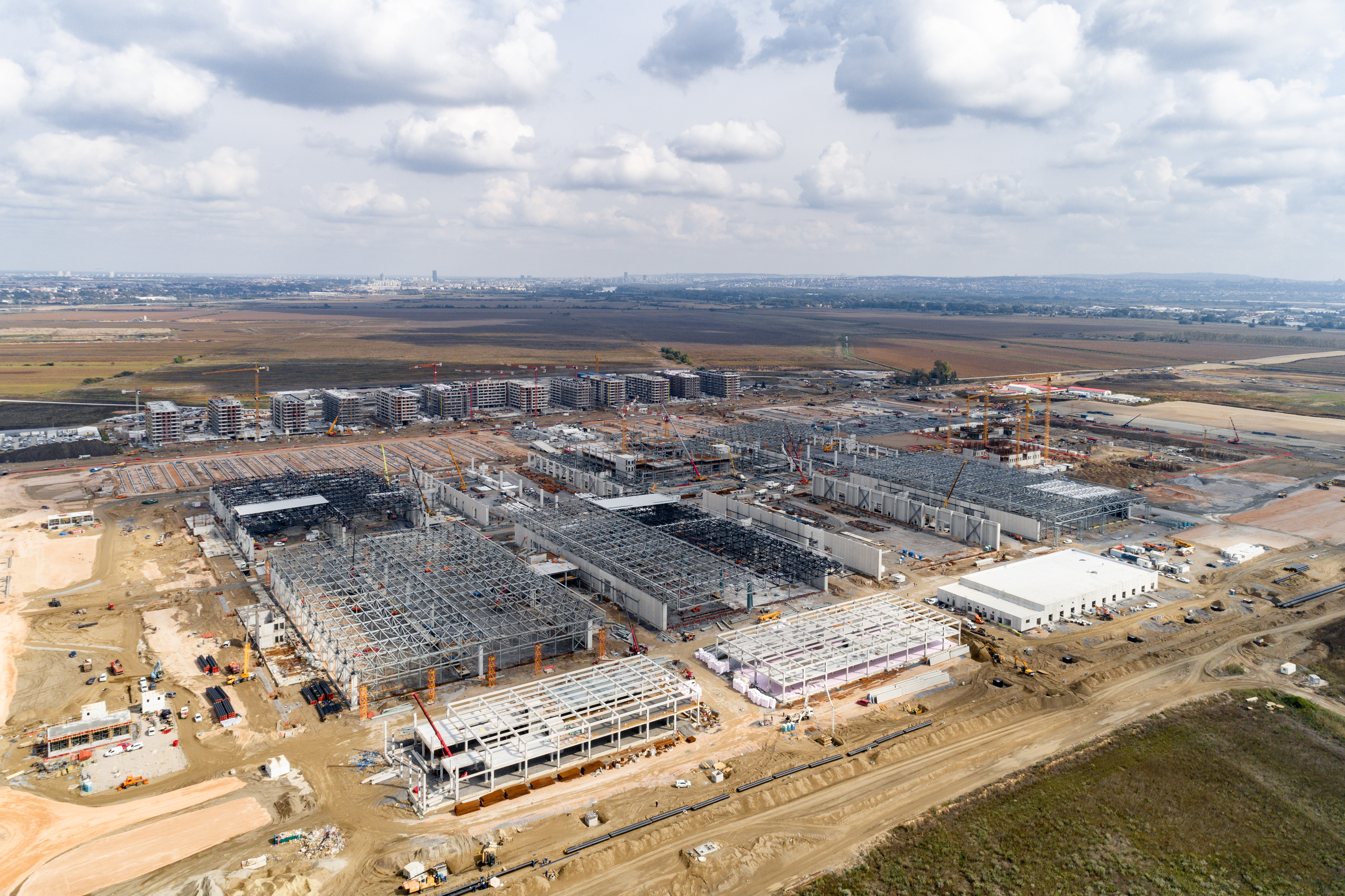
Overall construction output in Serbia is expected to decline this year, primarily due to the slowdown in civil engineering as several major road and railway projects were completed last year. By contrast, non-residential construction has entered a new growth cycle driven by investments connected to the hosting of EXPO 2027 in Belgrade. The event will be held in a purpose-built exhibition complex in the outskirts of the city, covering around 80 hectares. Alongside the construction of this complex, numerous public and private investments are indirectly tied to the event, including new hotels, accommodation, leisure, and commercial projects, as well as the reconstruction of museums, cultural heritage sites, and public spaces.

Aerial photo of the construction site of the EXPO 2027 complex – Photo: beobuild.rs

The EXPO 2027 complex itself is a vast construction site, comprising approximately 230,000 sqm of exhibition pavilions, multifunctional venues, congress and conference halls, as well as office and retail space. In addition, a residential complex with around 1,500 units is being built to house participating delegations. The exhibition will run for 93 days, from 15 May to 15 August 2027, featuring around 130 countries and hundreds of events spanning sports, science, culture, and innovation. Total investment could exceed EUR 2.5 billion, with EUR 1.5 billion allocated for the EXPO complex and a further EUR 1 billion for accompanying facilities and infrastructure. This project has been the key driver of growth in non-residential construction and is expected to sustain activity in the sector in the coming years.

The broader development zone around the EXPO 2027 complex extends far beyond the exhibition center itself. While the core site covers 80 hectares, total development area exceeds 200 hectares. It will include the new National Stadium complex, a center for aquatic sports, a theme park, recreation facilities, and hotels. The National Stadium alone is a EUR 600 million project, designed with 52,000 permanent seats and the capacity to expand by an additional 8,000. Construction began in early 2024 and, despite delays, it is expected to be completed in time for 2027. Other sporting and leisure facilities are also planned for delivery ahead of the event, though it remains uncertain whether all projects will meet the deadline.

Several other public and private developments across Belgrade are linked to the exhibition, including the reconstruction and expansion of museum facilities: a new Natural History Museum building, the relocation of the Nikola Tesla Museum, the renovation of the Aeronautical Museum, and the modernization of the City of Belgrade Museum, among others. The private sector is likewise preparing for the anticipated rise in visitors, with investments in accommodation accelerating. Notable projects under construction include new hotels under the Intercontinental and Ritz-Carlton brands, alongside numerous smaller ventures.

However, the high level of spending on the EXPO 2027 has placed considerable strain on the state budget. To maintain fiscal deficits at around 3% of GDP, funds have been reallocated from other public projects. This has been most evident in infrastructure development and civil engineering, where shifting priorities have led to significant delays on major planned projects. As a result, civil engineering output is contracting faster than expected in 2025, with negative implications for growth in 2026 as well. On the other hand, long-term economic benefits of hosting EXPO 2027 remain uncertain.

After the event concludes, the EXPO 2027 complex will be repurposed as the new Belgrade Fair Complex. The current fairgrounds in central Belgrade, built in the 1950s, are planned for redevelopment once operations move to the new site. This ensures that the EXPO facilities will continue to be used in the years ahead, supporting the economic rationale for the project. Moreover, new transport infrastructure, including a railway link to the city center, river dock facilities, and expanded commercial developments, should further enhance the attractiveness of the location for private investment.

EECFA countries in the European Commission’s 2025 Macro Forecast

Written by Dóra Barát – ELTINGA, EECFA Research

This summer ELTINGA at EECFA Research has again looked at how the European Commission sees the EECFA countries. Here is what has changed in the prospects between Autumn 2024 and Spring 2025.

Compared to Autumn 2024, economic outlook has deteriorated in all countries covered, although the projected growth remains positive across the board. The most significant downward revisions have occurred in Romania, Bulgaria, and Hungary, while countries like Croatia, Slovenia, and Russia have seen more moderate adjustments. Growth expectations for both the EU and the Euro Area have also slightly declined, mirroring the broader cooling of optimism across the region.

Average GDP growth in 2025-2026 is projected to be positive in all examined countries, though to differing degrees. Serbia is expected to record the highest expansion at 3.5%, followed by Türkiye (3.15%) and Croatia (3.05%), while Russia (1.45%) is forecast to have the slowest growth in the region. Growth in Euroconstruct member Hungary is projected at 1.65%, falling between the regional average and the broader EU outlook. The remaining EECFA countries (Romania, Bulgaria, and Slovenia) are expected to grow between 1.8% and 2.2%. Despite downward revisions, all countries in the region are forecast to outperform the averages of the EU (1.3%) and the Euro Area (1.15%), continuing the trend of a stronger growth in Eastern and Southeast Europe.

The projected growth rate of gross fixed capital formation (GFCF) for 2025-2026 has weakened in nearly all countries since the Autumn 2024 forecast. Romania has witnessed a major downward revision with the expected growth dropping by just over 4 percentage points, while Hungary has also registered a significant cut of around 2.4 percentage points. Türkiye, Slovenia, and Bulgaria have experienced more moderate declines. In Croatia, the outlook remained unchanged at 3.75%, and Russia was the only country with a slight upward revision. Despite the general slowdown, Serbia is projected to post the strongest GFCF growth at 6.7%, followed by Croatia (3.75%) and Romania (2.95%), while most other countries are set to grow between 1.25% and 2.75%. The EU (1.95%) and Euro Area (1.75%) are to remain at the lower end of the spectrum.

Expectations for the growth rate of gross fixed capital formation into construction have also been revised downward in all countries where data is available. Romania has seen the steepest decline with its projected growth falling from 8.45% to 3.9%, though it still holds the highest rate among the observed countries. Hungary and Slovenia have experienced similar reductions, both dropping by more than 2.5 percentage points. Smaller adjustments have been recorded in Bulgaria and Croatia where the outlook for GFCF into construction growth remains relatively strong at 2.85% and 3.8%, respectively. In the broader European context, the EU and the Euro Area are projected to see only a respective modest growth of 1.9% and 1.6%, slightly below most national forecasts in the region.

The Commission’s view on construction investment is somewhat different from ours. Partly it is because we examine the sector from the bottom. For each segment we come up with an individual story and this is how the total construction market is formed. Our latest forecast is in the 2025 Summer EECFA Construction Forecast Reports. Sample report and order

We, in EECFA, are also less optimistic about the near future than half a year ago. The direction of the revision is mostly downward. In cases of Bulgaria, Croatia and Hungary we project moderate growth which is pretty close to the Commission’s expectations. In four countries, however, we do not think average real growth until 2026 could be positive.

EECFA countries in the European Commission’s 2024 Macro Forecast

Written by Tünde Tancsics and Dóra Barát – ELTINGA-EECFA Research

Similarly to every summer, this summer too we have looked at how the European Commission sees our countries. Here is how GDP, investment and construction investment forecast have changed in the past half year.

Between Autumn 2023 and Spring 2024 economic outlook has improved for the majority of countries in the Eastern and Central Eastern European region (EECFA countries) for 2024-2025. Exceptions only included Türkiye, Romania and Hungary (this latter is covered by Euroconstruct), but the deterioration of the outlook was minimal. Expected GDP growth also decreased in case of the EU and the Eurozone.

Economic growth in the examined countries is expected to be between 2.3% and 3.9% by 2024-2025. The largest GDP expansion is related to Serbia, while Russia’s economy may grow least. At the same time, the expansion in the countries of the region is set to be much higher than in the EU and the Eurozone where projected GDP growth is only 1.1% and 1.3%, respectively.

Projected gross fixed capital formation (GFCF) growth rate for 2024-2025 sank in the majority of the countries by Spring 2024 from the previous level in Autumn 2023 with the only exceptions being Russia and Serbia. In Russia, a slight increase was seen from Autumn 2023 to Spring 2024. Prospects in Serbia significantly improved and next to Romania, its growth rate became the highest (6,45%) in the Eastern- and Central Eastern-European region (EECFA countries).

Expected GFCF (investment) growth is also high in Hungary, 4.9%, while for the other countries in the region, projected GFCF increase in 2024-2025 is between 3.05% and 3.6%. In the EU and the Eurozone, a much more modest expansion is estimated than in the region; GFCF prospects decreased from Autumn 2023 to Spring 2024, and they are only 1.15% and 0.85%.

Growth rate for investment into construction for 2024-2025 improved in Croatia, Hungary and Bulgaria, while in Romania, Slovenia, and in the EU and the Eurozone the outlook deteriorated from Autumn 2023 to Spring 2024. When it comes to the EU, growth is foreseen to be close to zero, whereas in the Eurozone a slight drop is projected for 2024-2025. The predicted growth for investment into construction in Spring 2024 was the highest in Romania (8.05%), followed by Hungary, Bulgaria, Slovenia (between 4.1% and 4.4%) and Croatia (2.45%).

This above represents the Commission’s view and it is different from ours at some point. It might be because our focus is exclusively on construction. For each segment we come up with an individual story and this is how the total construction market is formed. The latest predictions are in the 2024 Summer EECFA Construction Forecast Reports. Sample report and order: eecfa.com

As we see, Türkiye and Croatia could be top performers, while Russia and Romania are forecast to shrink. Although the Ukrainian growth rate is impressive it is because the market is coming back from a very low level.

EECFA countries in the European Commission’s 2023 Macro Forecast

Written by Tünde Tancsics and Dóra Barát – ELTINGA-EECFA Research

The European Commission’s 2023 Spring economic forecast for EECFA countries was showing some changes in outlook in comparison with Autumn 2022. Economic growth prospects improved in most countries in Spring 2023, excluding Serbia where growth expectations slightly fell against Autumn 2022. The EU and the Euro area growth prospects were outperformed in all countries surveyed – apart from Russia.

Projected economic growth in 2023-2024 was positive in all countries, although to varying degrees. It was over 3% in Türkiye and Romania (3.75% and 3.35%, respectively), but also above 2% in Serbia (2.45%) despite the downturn in expectations since Autumn 2022. GDP growth in other EECFA countries and Hungary (which is a Euroconstruct member) was projected to be between 1.5% and 2%, above both the EU and the Euro area averages of 1.35%. In Russia, growth forecast turned from negative to positive, but it was still close to zero: at just 0.2%.

Gross fixed capital formation data shows that growth projections for 2023-2024 were rather mixed, both in terms of direction and in the magnitude of change. Expected GFCF growth in Spring 2023 was by far the highest in Romania (7.5%), while in the Euroconstruct member Hungary, it was anticipated to decrease by 0.7%; a larger decline than the 0.2% contraction estimated in Autumn 2022. In Russia, a 0.4% growth was forecasted in Spring 2023, instead of the drop projected in Autumn 2022. In case of Türkiye, Slovenia, Croatia, and Bulgaria, expected GFCF growth was around 3%-4%. It doubled in Türkiye and quadrupled in Slovenia, while in Bulgaria it fell by less than half. In Serbia, GFCF prospects were similar to those of the EU and the Euro area, but slightly higher (1.7%).

In Slovenia, predicted construction growth rate almost doubled to close to 6% from Autumn 2022 to Spring 2023. For Romania and Croatia, projections were 6.55% and 3.05%, respectably. In Bulgaria and Hungary, the outlook significantly deteriorated. The same was true for the EU and the Euro area where expected GFCF into construction growth was barely above zero. Thus, the surveyed EU member countries outperformed the projected construction growth in both the EU and the Euro area. Hungary was the only exception where a decline was anticipated.

This above is the European Commission’s opinion. EECFA’s opinion, on Eastern European construction markets and forecast on submarket and segment level can be found in the latest EECFA reports. Sample report and order: eecfa.com. Türkiye and Croatia could be top performer, Romania, Russia and Serbia are foreseen to shrink.

Our approach is different from that of the Commission, as we provide forecast for each segment of construction. That is, we have a bottom-up approach, where forecast is computed separately for residential, office, retail, industrial buildings, roads, railways, utility etc. segments.

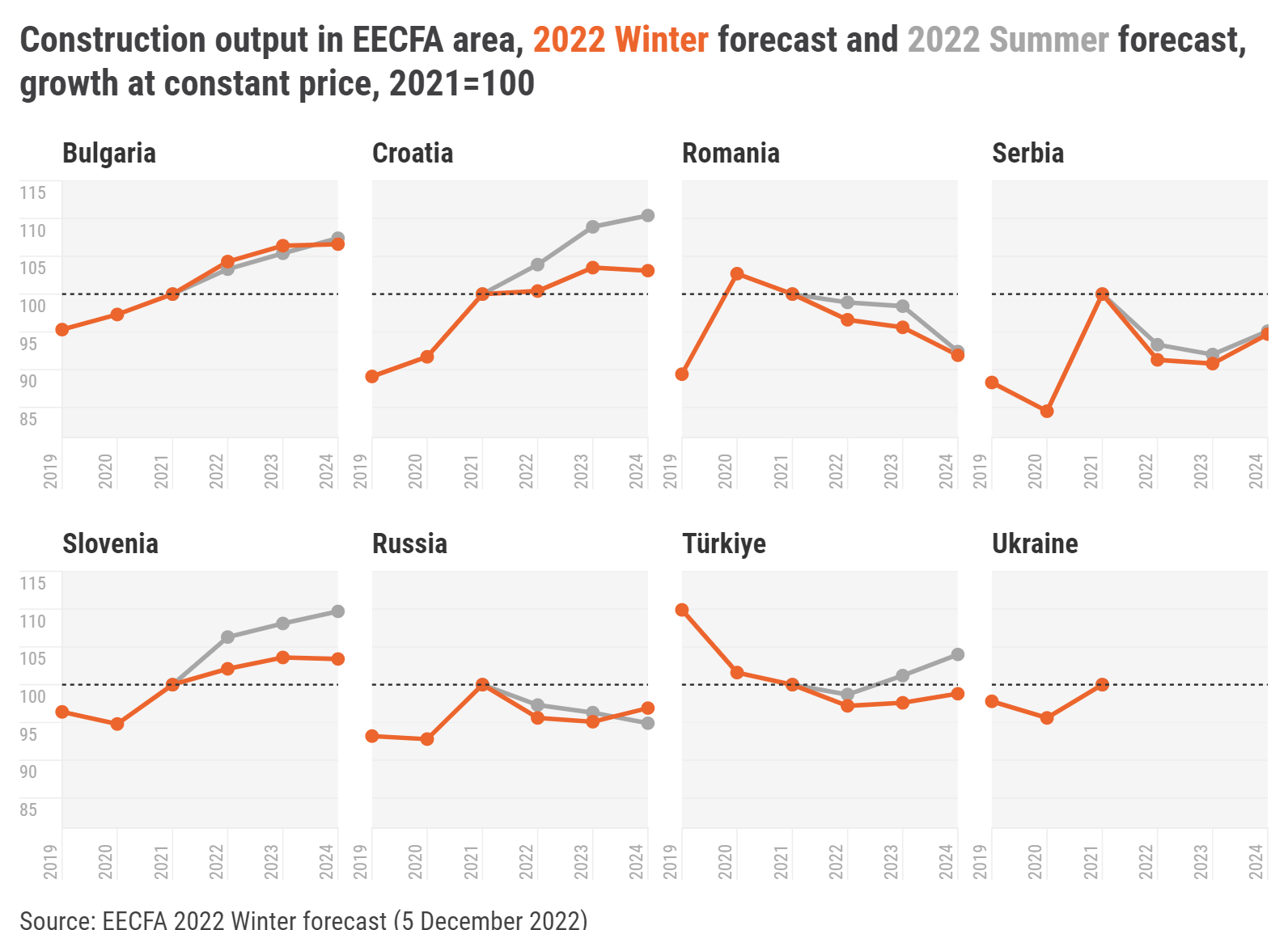
EECFA 2022 Winter Construction Forecast

EECFA’s 2022 Winter Construction Forecast Report was released on 5 December. Full reports can be purchased. Discounts and sample reports: info@eecfa.com. EECFA (Eastern European Construction Forecasting Association) conducts research on the construction markets of 8 Eastern-European countries.

Yet another downward revision characterizes the forecast for both regions. Southeast Europe could see shrinkage on the horizon. This, however, comes after a great period of construction in between 2016 and 2021, so the market is foreseen to come down from a peak level. In this respect, the 3% decline until 2024 is no drama, in EECFA’s view. The drama is in East Europe where the peak was reached in 2018 and the market was around 10% below that peak level even before the Ukraine war began. Since then, EECFA has paused issuing forecasts in Ukraine and a status report has been prepared. Without Ukraine, the region is expected to reach its bottom in 2023.

In Southeast Europe, almost all countries have been revised downward. Three out of them, however, could see expansion until 2024. The foreseen contraction in Romania and Serbia pulls down the region to negative. Romania is quite pessimistic; the market could shrink by almost 10% by 2024. Serbia is expected to witness a sizeable drop, too, before growth returns in 2024. As the region saw much construction in 2016-2021, the market will likely decline from the peak, making the 3% drop on the forecast horizon not-so-drastic.

Bulgaria:

  • Under the projected economic slowdown, construction will increasingly be affected by the ongoing political instability that is likely to undermine reforms within the Recovery and Resilience Plan, and delay implementation of the EU’s operational programmes.
  • Тotal construction output is estimated to have grown in 2022.
  • For 2023-2024 civil engineering is forecasted to increase at a more accelerated pace.

Croatia:

  • Residential construction output held up in 2022, impervious to war and disease. But it’s likely residential’s rapid growth will over time succumb to rising prices and a falling population.
  • Rail construction output will rise as more rail projects come online. Some new high-cost road projects may yet be undertaken for political reasons.
  • Energy prices will fuel building of oil/gas port facilities, pipelines and storage in 2022-2023, construction that the EU’s green-energy push may quench in favor of renewable energy and power grid projects.

Romania:

  • The Romanian construction market is set to shrink slightly in 2023 and 2024 as internal and external factors conspire to make building materials more costly. 
  • Inflation-induced lower purchasing power and growing mortgage interest rates are making loans more expensive, and few people can afford to buy a home in cash. 
  • On the one hand, Romania could benefit from the current global instability and attract more foreign investment to grow its economy. On the other, increased energy costs translate to higher operating and construction costs and discourage investment. 

Serbia:

  • The challenging economic situation will undoubtedly have negative effects on construction outputs. But how negative is the question of external factors and the coming events.
  • The domestic market is strong, with high public and foreign investments, as well as record employment. The highest economic risk comes from inflation and the expected recession in the EU.
  • The current economic slowdown could deepen the contraction in case of a prolonged crisis.

Slovenia:

  • Slovenia has experienced expansion in construction output on the back of the strong overall economic growth.
  • However, risks for the future include high inflation, large construction cost increases, and overheating economic growth. And increased interest rates will depress residential output in the future.
  • Supply chain constraints might jeopardize the completion of large civil engineering projects.

In East Europe, 2022 could be the 4th consecutive year of drop in Türkiye, and no quick recovery is foreseen on the horizon. We have turned somewhat optimistic in Russia, but only from 2024 on. Without Ukraine, the region will likely hit bottom in 2023. The region reached its peak in 2018 and just before the war in Ukraine started, the market was around 10% below this 2018 level. Owing to the war, Uvecon, the Ukrainian member institute of EECFA, has prepared a status report for the second time instead of the forecast report.

Russia:

  • Direct and indirect effects of sanctions hammered the construction market that declined faster in 2022 than previously expected.
  • Forced acceleration of projects in transport and energy, in response to export and import structure changes due to sanctions, will spur growth in civil engineering.
  • Many targeted programs and national projects will support the construction sector throughout the forecast horizon.

Türkiye:

  • The construction industry has been trying to deal with high inflation that has led to 120% yearly rise in construction cost and 189% increase in housing prices.
  • There has been some deficit between produced and needed home numbers since 2000, augmented by the influx of refugees from Syria and neighbouring countries (3,920 million registered; unknown unregistered).
  • The low-cost housing project of the government as of September is expected to stop the current slump in the construction sector.

Ukraine:

  • Prospects for construction depend on the existing situation on the market as a result of the destruction of residential, non-residential and engineering infrastructure, and the end of hostilities with the possible economic recovery.
  • Total area of damaged or destroyed housing is 74.1 million sqm (7.3% of the total area of Ukraine’s housing stock), a number which, unfortunately, grows every day. Restoring the housing stock will become a key issue for Ukraine after the war ends.
  • Energy infrastructure remains the top priority for recovery, as nearly 40% of the energy system has been destroyed.

What opportunities the RRF can bring to Bulgaria’s construction

Written by Anita Dangova, EPI, EECFA Bulgaria

Bulgaria’s Recovery and Resilience Plan (RRP) aims to facilitate economic and social recovery from the COVID-19 crisis and to create a more sustainable, equitable, and successful economy. It includes a set of schemes not only to restore the economy’s growth potential, but to boost it, too. In achieving this, several construction projects to increase energy efficiency and decrease CO2 impact are to be implemented in 2023-2026.

The official cover of Bulgaria’s RRP; Source: National Recovery and Resilience Plan of the Republic of Bulgaria

How the RRP will impact housing construction

One of the major projects provides support for sustainable energy-efficient renovation of the housing stock since, currently, only 7% of the floor area of occupied residential buildings complies with modern energy efficiency (EE) requirements. The project, to be launched by end 2022 with an implementation period till 2026, will attract a total of EUR 607mln under the Recovery and Resilience Facility (RRF). Multi-family residential buildings will be eligible for financing nationwide and renovated units have to achieve 30% primary energy savings. Residential buildings to be financed under this scheme are divided into two groups depending on the time of application of owners’ associations: 

  • applications until March 2023: 100% of the project funding will be provided from the RRP, 
  • applications from April 2023 to December 2023: 80% of the project funding will be provided under the RRP, and 20% will be in the form of self-contribution. 

Another project with an implementation period till 2025 is dubbed “Program for the financing of single renewable energy measures in single-family and multi-family buildings”. Total planned funding is EUR 123mln (EUR 72mln from the RRP and EUR 51mln in the form of national and private co-financing). The project aims to increase the use of renewable energy in final energy consumption in households by financing new solar systems for domestic hot water and photovoltaic systems. There are two measures:

  • construction of solar systems for domestic hot water supply. The maximum amount of grant per individual household is to be 100% of the cost of the system, but no more than EUR 1000;
  • construction of photovoltaic systems up to 10 kW. The maximum amount of grant per individual household is to be up to 70% of the system cost, but no more than EUR 7700.

How non-residential construction will benefit from the RRP

One of the projects finances – between 2022 and 2026 – the sustainable energy renovation of non-residential buildings owned by municipalities and national authorities (regional administrations, ministries); the Bulgarian Academy of Sciences; public-private partnerships for buildings in the field of production, trade and services; non-profit legal entities, municipal enterprises, and commercial companies. The project consists of two components: 1) EUR 189mln (without VAT) to public buildings; 2) EUR 120mln (without VAT) for manufacturing, commercial and service buildings.

Continue reading What opportunities the RRF can bring to Bulgaria’s construction

EECFA countries in the European Commission’s 2022 Macro Forecast

Prepared by Tünde Tancsics and Dóra Barát – ELTINGA-EECFA Research

Prior to the publication of our 2022 Summer EECFA Construction Forecast Report, the European Commission released its forecast for the economic prospects for EECFA countries. Here are the main changes in the prospects between Autumn 2021 and Spring 2022. And as a comparison, at the end of the post you can check how we have revised our forecast.

Economic outlook has deteriorated in almost all EECFA countries compared to autumn but remains positive in most. The only exception is Russia where the economy is expected to shrink instead of the previously anticipated growth due to the war and the related sanctions. The prolongation of the war could also lead to a further decline in the economic growth of all countries.

Link to this viz >>

Apart from Russia, the rest of the EECFA countries (plus Hungary, which is a Euroconstruct member) were expected to see high growth rates of over 3.8% in Autumn 2021. The slowdown of economic growth in Slovenia and Serbia is projected to be moderate, respective -0.5 and -0.7 percentage points in the Spring 2022 forecast for the period of 2022-2023. However, all other EECFA countries have larger projected declines in economic growth (ranging from -1.2% to -6.9%) compared to both the EU and the Eurozone. The forecasted economic growth fell most in Russia, Romania and Turkey (-6.9, -2.1 and -1.5 percentage points respectively). Russia is the only country that not only represents an economic contraction (-4.45%) but is also the only EECFA country to remain below the estimated GDP growth rate of the EU and Eurozone for Spring 2022. Thus, apart from Russia, the others still have the same or higher economic growth than the EU average.

In terms of gross fixed capital formation (investment), predicted growth has decreased in both EECFA countries and the Euroconstruct member Hungary, as well as in the EU. However, the extent of this decrease varies significantly among countries. Whilst in the EU and the Eurozone, projected GFCF growth fell moderately (-1.1% and -0.9%, respectively), all other countries are expected to see a decline of over 2 percentage points, Bulgaria excepted. This implies, for instance, stagnating GFCF in Bulgaria and a remarkably large negative growth in Russia (-11%), similar to the GDP growth indicator. There is also a notable falloff in Hungary and Romania (-4.9 and -4.6 percentage points, respectively), although the former started from an expected growth of more than 10% in autumn, while the latter from only 6%. It suggests that the estimated growth of the GFCF for 2022-2023 in Spring 2022 is just above 1% in Hungary. In other EECFA countries, the decline in GFCF growth varies between 2.2 and 3.1 percentage points.

Construction growth has been revised downward everywhere except for Bulgaria (0.4 percentage points). While in the EU and Eurozone the indicator declined by approximately 1 percentage point, in Slovenia, Romania and Hungary, construction growth is to fall by more than 5 percentage points in 2022-2023. However, growth remains positive for every country where data is available, with Bulgaria leading the prospects (6.6%).

So this above is the European Commission’s opinion. And here you can check how we, EECFA see the upcoming years for Eastern European construction markets. Croatia and Slovenia are on the top, while Russia and Serbia are on the bottom.

Link to this viz >>

Our approach is different from that of the Commission, as we provide forecast for each segment of construction. That is, we have a bottom-up approach, where forecast is computed separately for residential, office, retail, industrial buildings, roads, railways, utility etc. segments. Mail us if you are interested.

Or check our sample report and order on eecfa.com

EECFA 2022 Summer Construction Forecast – Military conflict edition

EECFA’s 2022 Summer Construction Forecast Report was released on 27 June. Full reports can be purchased. Discounts and sample reports: info@eecfa.com. EECFA (Eastern European Construction Forecasting Association) conducts research on the construction markets of 8 Eastern-European countries.

Our earlier optimism over the Southeast European region of EECFA has gone. The current forecast is foreshadowing almost no growth until 2023 and contraction in 2024. The main reason behind is the worsening climate for construction due to the consequences of the Russian invasion of Ukraine. In the Eastern European region, we have turned pessimistic. The market of Russia and Turkey together is projected to stay below its 2021 level until 2024. We haven’t been able to provide our standard forecast for Ukraine in this summer round, but a status report has been compiled. We will resume providing forecast as soon as construction-related data collection of Ukrstat returns to normal.

Link to the viz >>

Forecast for Romania, the largest Southeast European construction market, has been revised downward. Instead of expansion, shrinkage is our current scenario. Serbia, which was the fastest growing market in the past 7 years, has an even more pessimistic outlook than in the previous forecast round. In Bulgaria, a whole different trajectory of spending EU funds is the reason behind the revision. We are negative on Russia all the way over the horizon and in Turkey the start of the recovery is expected to be postponed for yet another year.

Bulgaria. Owing to several external and domestic factors, outlook for Bulgaria’s economy to grow faster in 2022 has been reduced. And this year the construction market has entered a period of increasing unpredictability and heterogeneous performance. Residential construction has benefited from favourable financing conditions, and residential property has been used as a hedge against inflation. However, this will not last forever. EECFA is not optimistic in non-residential construction, while civil engineering could expand over the forecast horizon. Total construction output is prognosticated to be in the black with low, but positive growth rates in 2022-2024.

Croatia. The picture for Croatia’s construction sector is mixed, both from sector to sector and within sectors. Sector-to-sector, the output growth rates of Croatian construction sectors are decoupling, as some come close to completing the post-transition catch-up growth phase, while others are not nearly so far along. Within sectors, the strength of crucial output drivers, e.g., tourism season results, construction cost inflation, interest rate evolution, is uncertain and very dependent on events and policymakers’ reactions to them. Overall, the picture looks bright now, especially for residential construction, but the fight against inflation or a serious new COVID-19 outbreak could darken it rapidly and considerably.

Romania. As the short-term effects of the pandemic dissipate, the economy faces new challenges such as inflation and global trade disruptions. GDP is set to grow by 2.9% in 2022, in real terms, down from the previous prediction, but by 2023 (+4.4%) and 2024 (+4.8%) growth could accelerate (source: the National Forecasting Commission). Construction showed signs of recovery, so total construction output is to nominally grow, but slightly decrease in real terms this year. Material and energy prices have battered infrastructure projects hardest as seeking extra financing can be lengthy and difficult. Threats to construction growth in this forecast horizon are evidently increased costs of materials and energy, counter-inflationary policies, and the instability caused by the neighbouring war to regional and global trade networks. Countering these are the positive outlook for wages, employment, investment, and the overall economy. The availability of EU programs for co-financing, including the Recovery and Resilience Facility, could also help certain construction segments.

Serbia. In these challenging times, it will be a real endeavour to keep the pace and level of construction activity, even for a heated and growing Serbian economy. Unfortunately, economic and political developments in Europe are threatening to forcefully subdue the growing cycle in construction and the economy as a whole. So far, the economy is showing a relative resilience and construction activity has only slightly decreased compared to its expected performance in 2022, while permits are still keeping the good tempo. Nevertheless, the risks are still there, and a prolonged instability could produce a much deeper downturn and longer recovery. The strong performance of civil engineering and residential will assist this year’s output levels, but prospects for the rest of this forecast period are still quite conditioned by external factors. The ongoing economic crisis in the EU could easily escalate and produce further adjustments for 2023 and 2024 figures.    

Slovenia. Construction output increased fast in 2021 as the pandemic subsided. With rapid economic growth following in 2022, total construction output will likely exceed EUR 4 billion for the first time since 2008. Real growth will be slower, though, as construction cost index has also increased with the fastest pace in a decade, up by more than 10% in 2021 and 2022. Future growth is projected to be slower, especially if interest rates grow faster than expected due to high inflation rates. Still, several large civil engineering as well as residential construction projects are set to continue and prevent construction output from decreasing. 

Russia. Last year, the Russian economy showed strong recovery, partly on the back of construction whose growth turned out to be much better than expected (6,8% instead of 3,2% that EECFA had previously forecasted). The reasons behind were the active completion of non-residential projects that had been frozen in 2020, high demand in the housing market that supported construction activity in residential, and considerable state funding for various infrastructure projects that accelerated growth in civil engineering. However, the special military operation in Ukraine that began in February this year has neutralized all positive trends in construction and has led to a sharp worsening in the macroeconomic situation. Unprecedented economic sanctions imposed on Russia will inevitably affect the construction sector whose output is predicted to be negative throughout the forecast horizon: -2,7% in 2022 and from -1% to -1,4% in 2022-2024.

Türkiye. The Turkish economy is facing an unprecedented devaluation in Lira and soaring inflation, hammering wage earners. Manufacturing sectors relying on imported inputs, agriculture, and construction in particular, face difficulties in financing production and selling to customers with lower real incomes. But industrial production and exports are not much hit by the weakened Lira. Since the beginning of 2022, housing shortage, high dwelling prices and rents have been an issue. In the last 21 years fewer homes were built than the need, and the around 3,8 million Syrian refugees and illegal migrants appear to contribute to housing shortage. Due to the roughly 2,8 million dwelling units under construction, housing starts in Q1 2022 may continue to fall by the end of the year. The small decline in housing completion, however, because of declining demand under current macroeconomic conditions, may turn into a positive rate of change under the effects of interest rate subsidies for mortgage loans. Total construction output in Türkiye in 2022 is estimated to contract, so it would be the fourth consecutive year of decline. Mild recovery is expected to begin from next year on.

Ukraine. Since February 2022, Ukraine has been at war with Russia. As of June 2022, the Russians destroyed up to 30% of Ukraine’s infrastructure, damaged 2% of overpasses and more than 23,000 km of roads in Ukraine. About 20% of Ukraine’s territory is being occupied. Russia blocked the seaports through which imported goods were delivered to Ukraine. Building material factories and warehouses mostly remained in the occupied territory and most developers have frozen their projects for an indefinite period. Despite this, some positive signs are beginning to appear in the construction market, mainly in residential where the market is gradually reviving, adapting to the military situation (especially in the relatively safe western region). Little by little, critical infrastructure is being restored (destroyed bridges, roads, electricity and gas supply, communication lines). Under these conditions of major uncertainty, and before the end of the war, predicting future developments in the construction market of Ukraine is impossible. Therefore, Uvecon, EECFA’s Ukrainian member institute in Kiev, prepared a brief Status Report this time instead of the usual Forecast Report.

____________

Source of data: EECFA Construction Forecast Report, 2022 Summer

Contact information: www.eecfa.com, info@eecfa.com