Written by Dejan Krajinović, Beobuild Core d.o.o., EECFA Serbia
Overall construction output in Serbia is expected to decline this year, primarily due to the slowdown in civil engineering as several major road and railway projects were completed last year. By contrast, non-residential construction has entered a new growth cycle driven by investments connected to the hosting of EXPO 2027 in Belgrade. The event will be held in a purpose-built exhibition complex in the outskirts of the city, covering around 80 hectares. Alongside the construction of this complex, numerous public and private investments are indirectly tied to the event, including new hotels, accommodation, leisure, and commercial projects, as well as the reconstruction of museums, cultural heritage sites, and public spaces.
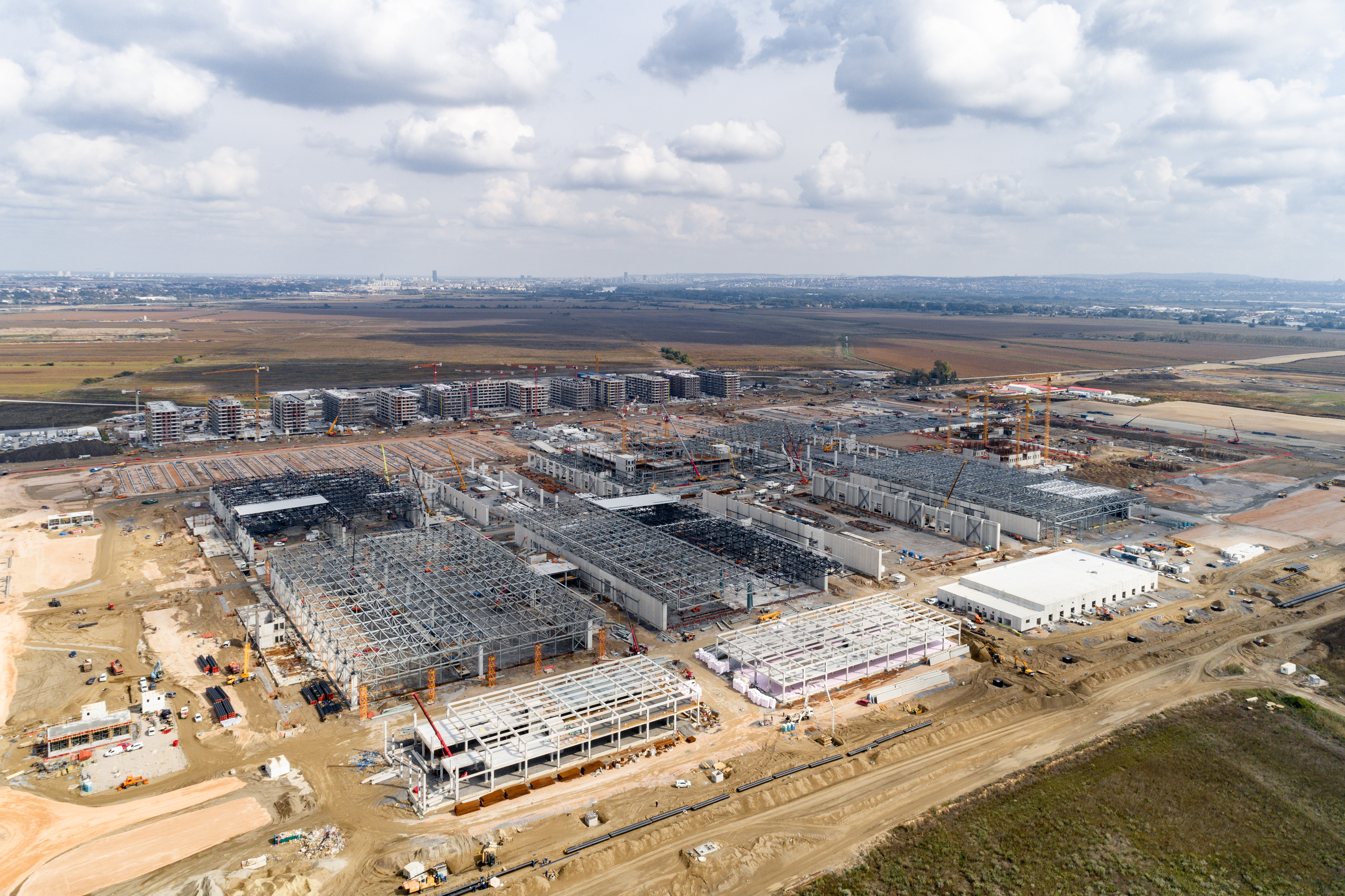
The EXPO 2027 complex itself is a vast construction site, comprising approximately 230,000 sqm of exhibition pavilions, multifunctional venues, congress and conference halls, as well as office and retail space. In addition, a residential complex with around 1,500 units is being built to house participating delegations. The exhibition will run for 93 days, from 15 May to 15 August 2027, featuring around 130 countries and hundreds of events spanning sports, science, culture, and innovation. Total investment could exceed EUR 2.5 billion, with EUR 1.5 billion allocated for the EXPO complex and a further EUR 1 billion for accompanying facilities and infrastructure. This project has been the key driver of growth in non-residential construction and is expected to sustain activity in the sector in the coming years.
The broader development zone around the EXPO 2027 complex extends far beyond the exhibition center itself. While the core site covers 80 hectares, total development area exceeds 200 hectares. It will include the new National Stadium complex, a center for aquatic sports, a theme park, recreation facilities, and hotels. The National Stadium alone is a EUR 600 million project, designed with 52,000 permanent seats and the capacity to expand by an additional 8,000. Construction began in early 2024 and, despite delays, it is expected to be completed in time for 2027. Other sporting and leisure facilities are also planned for delivery ahead of the event, though it remains uncertain whether all projects will meet the deadline.
Several other public and private developments across Belgrade are linked to the exhibition, including the reconstruction and expansion of museum facilities: a new Natural History Museum building, the relocation of the Nikola Tesla Museum, the renovation of the Aeronautical Museum, and the modernization of the City of Belgrade Museum, among others. The private sector is likewise preparing for the anticipated rise in visitors, with investments in accommodation accelerating. Notable projects under construction include new hotels under the Intercontinental and Ritz-Carlton brands, alongside numerous smaller ventures.
However, the high level of spending on the EXPO 2027 has placed considerable strain on the state budget. To maintain fiscal deficits at around 3% of GDP, funds have been reallocated from other public projects. This has been most evident in infrastructure development and civil engineering, where shifting priorities have led to significant delays on major planned projects. As a result, civil engineering output is contracting faster than expected in 2025, with negative implications for growth in 2026 as well. On the other hand, long-term economic benefits of hosting EXPO 2027 remain uncertain.
After the event concludes, the EXPO 2027 complex will be repurposed as the new Belgrade Fair Complex. The current fairgrounds in central Belgrade, built in the 1950s, are planned for redevelopment once operations move to the new site. This ensures that the EXPO facilities will continue to be used in the years ahead, supporting the economic rationale for the project. Moreover, new transport infrastructure, including a railway link to the city center, river dock facilities, and expanded commercial developments, should further enhance the attractiveness of the location for private investment.
Forecast up to 2027 for the Serbian non-residential market and for the rest of construction subsegments is available in the 2025 Summer EECFA Forecast Report Serbia. To order it or to request a sample report, please contact us.